
Are You Among the 1 in 5 Americans Overlooked in the Mental Health Crisis? Shocking Insights Revealed!

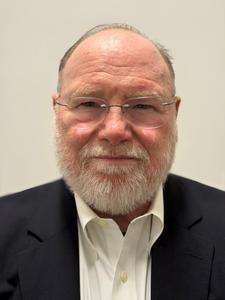
Dr. Ronald C. Kessler: A Pioneer in Mental Health Research
On February 3, 2026, Dr. Ronald C. Kessler, the McNeil Family Professor of Health Care Policy at Harvard Medical School, was featured in a comprehensive interview published in Genomic Psychiatry. With a career that has redefined the understanding of mental disorders worldwide, Dr. Kessler has played a pivotal role in shaping research and policy concerning the prevalence, distribution, and treatment of mental health issues. His extensive academic background includes secondary appointments as Professor of Epidemiology at the Harvard T.H. Chan School of Public Health, Program Director at the University of Michigan Institute for Social Research, and a position at the Massachusetts General Hospital Center for Precision Psychiatry. Kessler's impressive publication record includes over 1,300 scientific works cited more than 330,000 times, making him the most cited author in psychiatry and psychology globally.
A Unique Journey from Bristol to Harvard
Dr. Kessler's roots trace back to Bristol, Pennsylvania, where he was raised in a Quaker community. Initially, he aspired to pursue a legal career as a first-generation college student. However, a transformative encounter with Professor Bill Phillips redirected his path toward criminology and sociology. He later obtained a sociology degree from the University of Wisconsin, studying under Herbert Menzel. His postdoctoral training at the New York State Psychiatric Institute, focusing on teenage drug use under Denise Kandel, established the methodological groundwork that would later prove crucial in his research.
His unexpected three-year tenure at NBC, collaborating with Ron Milavsky on a longitudinal survey examining the impact of television violence on child mental health, also shaped his career. Despite feeling out of place in a corporate environment, Dr. Kessler found the experience invaluable. "I had to think about how to design and interpret research that would directly inform programming, scheduling, and advertising decisions, often with time pressure and with millions of dollars at stake," he reflected.
Contributing to a Deeper Understanding of Mental Health
After joining the University of Michigan as an Assistant Professor, Dr. Kessler became an integral part of the Institute for Social Research (ISR), which had conducted the first national survey on mental disorder prevalence after World War II in 1957. His leadership in developing an interdisciplinary training program in psychiatric epidemiology at ISR set the stage for significant collaborative research, including studies on the effects of the auto crisis on unemployed workers and the long-term impacts of HIV/AIDS.
A defining moment in his career came in 1990 when he was invited to join the MacArthur Foundation Research Network on Successful Midlife Development (MIDMAC). This opportunity allowed him to collaborate with a distinguished group of scientists, culminating in the MIDUS (Midlife Development in the United States) study, which integrated surveys, cognitive testing, and biomarkers to investigate the interplay between life experiences and health outcomes.
Another groundbreaking project was the National Comorbidity Survey (NCS), which Dr. Kessler led shortly after MIDUS. This survey was the first of its kind to provide a nationally representative assessment of DSM disorders, employing the Composite International Diagnostic Interview (CIDI) to improve diagnostic accuracy and inform policy discussions on mental health treatment. "The results allowed the field to see, for the first time, how early-onset disorders pile up and predict later problems," he stated. This work significantly influenced global discussions regarding mental health funding and treatment priorities.
Expanding Global Research Initiatives
The success of the NCS prompted international interest in conducting similar surveys. Dr. Kessler's collaboration with global researchers led to the establishment of the World Mental Health (WMH) Survey Initiative, which is now the largest international consortium dedicated to psychiatric epidemiological research. This initiative has resulted in national epidemiologic surveys in over 30 countries, producing more than 1,000 journal articles and setting new standards for mental health research.
In 1996, Dr. Kessler accepted a professorship at Harvard Medical School, allowing him to further focus on WMH data management and analysis. His recent transition out of the director role at WMH has placed long-time colleagues Bill Axinn and Stephanie Chardoul at the helm, continuing the legacy of impactful research.
Innovative Interventions and the Future of Mental Health
Currently, Dr. Kessler is shifting his focus from population surveys to developing precise interventions. His primary initiatives include the SAFEGUARD program aimed at reducing suicidal behavior among U.S. Army soldiers and a university mental health program that combines life-skills training with digital interventions.
"I would like to help facilitate early evaluations to illustrate the value of such a tracking system," he remarked, envisioning a hybrid approach that merges population-level surveillance with individualized digital interventions. This model could offer insights for mental health systems facing rising youth psychological distress globally.
Values and Personal Reflections
Dr. Kessler emphasizes three core values: methodological rigor, interdisciplinary collaboration, and mentorship. He advocates for a broader interpretation of diversity, equity, and inclusion in science, stressing the need to address educational disparities that affect students from various socio-economic backgrounds.
In a revealing moment during the interview, Dr. Kessler shared his perspective on happiness, stating, "I do not really think of 'perfect happiness' as a meaningful or even desirable goal." Instead, he aspires for grounded well-being that fosters connection and purpose. His hopes for the future include fostering environments that support mental health research while navigating the complex landscape of academic politics.
The interview with Dr. Kessler offers a profound look into the mind of a scientist whose work has significantly impacted mental health policy and research. As the field continues to evolve, his insights will likely shape the future of mental health interventions and research globally. To read the full interview, visit Genomic Press.
Virus Surge Hits Atrium Health: Are You and Your Family Safe? Shocking Stats Revealed!

You Won't Believe Which 8 Smartphones Seniors Are Raving About in 2026 - #4 Will Shock You!

UK Vaccine Market Set to Skyrocket to $3.3B by 2035—Are You Prepared for the Shocking Changes?

NFL Coaching Chaos: Why the Cardinals’ Shocking Choice Could Change Everything!

24 Kansas Artists Honored: Discover the SHOCKING Secrets Behind Their Artistry! You Won't Believe the Talents That Got Left Out!

This Swiss Startup's Shocking Ammonia-Powered Breakthrough in Detroit Could Change Everything—Are You Ready?
You might also like: