
Minnesota's Gov. Walz Shocks Everyone with 'Never Again' Decision—What Does This Mean for His Legacy?

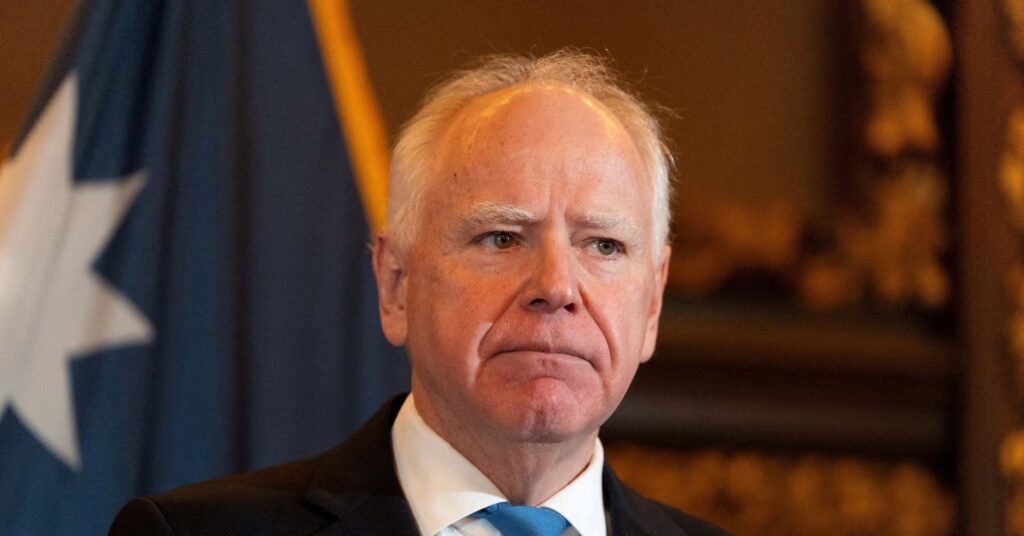
Minnesota Governor Tim Walz has declared that he will not pursue any future elected office, a decision that marks a significant turning point in his political career. In a candid interview with MS Now on January 28, Walz, 61, referred to himself as a political "lightning rod" and stated emphatically, "
I have no political consideration, will never run for an elected office again. Never again.
"
This announcement comes on the heels of his earlier declaration on January 5, when he indicated that he would not seek a third term as governor, set to conclude in early 2027. Walz's decision to step back from political life is particularly poignant given his previous involvement in high-stakes politics as he sought to serve as the U.S. vice president alongside presidential candidate Kamala Harris in the 2024 election, a bid that ultimately fell short against Donald Trump and the Republican ticket.
Walz's political journey has been marked by extensive experience, including six terms in the U.S. House of Representatives before his election as Minnesota's 41st governor in 2018. His tenure has not been without its challenges, especially with a burgeoning fraud scandal affecting the state's welfare system. The issue escalated into a political crisis, partially fueled by Trump's criticisms, as he labeled Minnesota a "hub of fraudulent money laundering activity."
The governor characterized the ongoing fraud scandal as a "crisis," attributing much of the blame to political opportunists who, he claims, aim to tarnish his administration to gain political leverage. During his interview, Walz expressed a desire to shift focus away from election-related concerns, stating that he wants to concentrate on addressing the significant issues facing the state. He remarked, "
Let others worry about the election while I focus on the work.
"
The timing of Walz's announcement is critical, as the Trump administration has recently intensified scrutiny of Minnesota, particularly regarding its sizable population of Somali Americans and Somali immigrants. Allegations of fraud have been linked to some nonprofit organizations that administer childcare and social service programs funded by federal assistance, with claims dating back to 2020.
Walz has sought federal support to combat the fraud issue, yet he has criticized Trump and fellow Republicans, suggesting that their attacks on Minnesota are part of a broader agenda to make the state a "colder, meaner place." He labeled them as opportunists willing to sacrifice the well-being of Minnesotans for political gain.
The situation in Minnesota has intensified recently with the commencement of Operation Metro Surge, an initiative launched by the Trump administration that involved the deployment of ICE and Border Patrol agents to the Minneapolis–St. Paul area. The operation has sparked outrage, particularly following two separate incidents in which federal agents shot and killed U.S. citizens Renee Good and Alex Pretti in Minneapolis, prompting criticism from Walz, Minneapolis Mayor Jacob Frey, and other Democrats.
As Walz prepares to leave the political arena, his decision to step back raises questions about the future of Minnesota's leadership and the impact of the ongoing welfare fraud scandal. With political tensions running high, the governor's commitment to focus on the "work" ahead may resonate with constituents seeking stability in turbulent times. However, the question of who will fill the political void left by Walz remains open as Minnesota approaches a new chapter in its governance.
Golden Entertainment’s Shocking $30/Share Merger: What This Means for Your Investments!

Gold Just Surpassed Bitcoin's Market Cap Overnight—Is BTC’s Collapse Imminent? Find Out Now!
FBI Raids Georgia Election Center: What Shocking Secrets Are They Hiding?

The Shocking Truth About Alternative Protein: 7 Secrets That Could Change Everything You Eat!

Are Pediatricians Really Cashing in on Vaccines? Shocking Profit Numbers Revealed!
John Wahl's Shocking Move: Is This the Game-Changer for Lieutenant Governor Race? You Won't Believe What He Just Revealed!
You might also like: