
Gold Just Surpassed Bitcoin's Market Cap Overnight—Is BTC’s Collapse Imminent? Find Out Now!

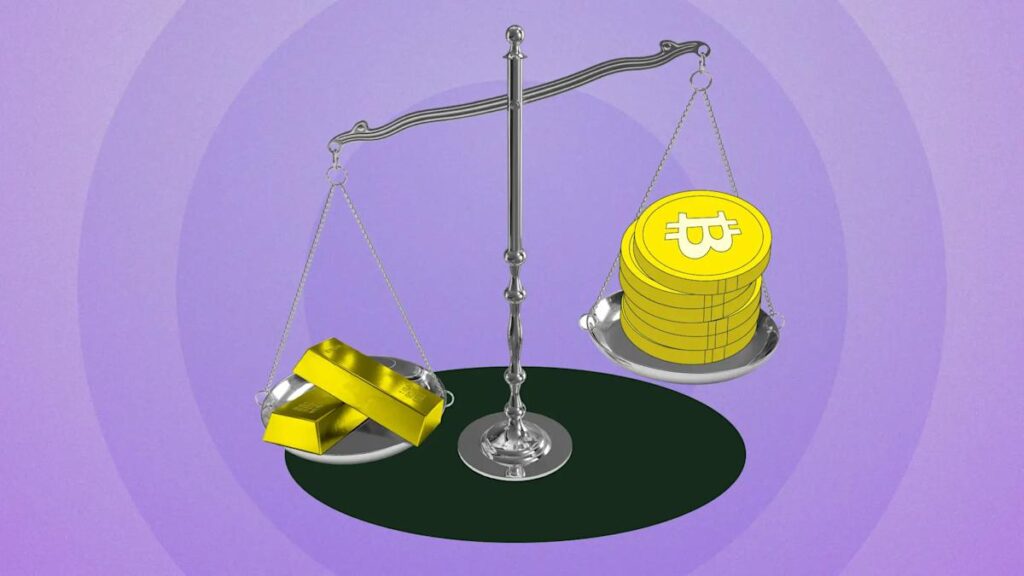
In a dramatic shift in the financial landscape, gold has soared to new all-time highs, surpassing $5,500 per ounce, as investors turn increasingly towards traditional safe-haven assets amidst growing global uncertainties. The yellow metal's price surge marks an impressive **18%** increase year-to-date and more than **60%** growth since 2025, demonstrating a significant pivot in investor sentiment.
In a striking comparison, Bitcoin has seen a sharp decline, falling below **$90,000** and erasing all gains from 2026. This downturn underscores a broader trend where investors are favoring physical gold over cryptocurrency in times of instability, delaying Bitcoin's narrative as a hedging asset. In just one day, gold added approximately **$1.75 trillion** to its market cap—almost equivalent to the entire market value of Bitcoin, highlighting the aggressive capital rotation into traditional assets.
Gold's incredible rally began in mid-January when it breached the **$5,000** mark. By January 26, the metal peaked at around **$5,597** during trading in Asia, reflecting a robust demand for gold and silver, the latter also hitting **$120** per ounce for the first time ever. This movement in precious metals has prompted some industry analysts like Tom Lee to suggest that a parabolic move in gold and silver could be masking bullish signals for Bitcoin and Ethereum.
The price escalation in gold is driven by a confluence of macroeconomic, geopolitical, and structural factors. Rising global tensions, including fears of trade wars and political instability, have prompted investors to seek the stability that gold provides. The **U.S. dollar** has also weakened, dropping to four-year lows, which makes gold more affordable for international buyers, further increasing global demand.
Anticipated cuts to **Federal Reserve** interest rates have reduced the opportunity cost of holding non-yielding assets like gold, making it a more attractive option. Additionally, strong central bank demand for gold, driven by de-dollarization trends, has been bolstered by **$2.7 billion** in retail and institutional inflows into tokenized gold products, particularly from markets in **China** and **Hong Kong**.
In stark contrast, Bitcoin, often referred to as “digital gold,” has struggled to maintain its value during this period of uncertainty. Despite the geopolitical developments that boosted gold prices, Bitcoin experienced a **6.6%** drop while gold saw an **8.6%** increase. This underperformance has left Bitcoin approximately **30%** below its peak of **$120,000** in October 2025, and the broader cryptocurrency market cap has contracted to around **$3 trillion**.
As liquidity in the market tightens, many Bitcoin investors are treating their holdings as cash, selling for quick liquidity. Bitcoin's correlation with U.S. equities remains around **0.51**, linking it more closely to tech stocks rather than traditional safe havens like gold. The contraction of global liquidity, fueled by quantitative tightening from the **Federal Reserve** and rate hikes from the **Bank of Japan**, has placed pressure on high-risk assets, while gold is benefiting from defensive capital flows.
Historically, in times of uncertainty, capital tends to flow first to low-risk assets such as precious metals. While Bitcoin may eventually recover as liquidity returns to the market, some analysts caution that this rotation narrative could be overly optimistic; many Bitcoin holders are now selling at a loss for the first time since 2023.
The current dynamics between gold and Bitcoin illustrate a significant moment in the financial markets. As investors flock to the safety of gold amid global tensions and economic fears, Bitcoin's status as a hedge against uncertainty is being put to the test. Whether this trend will continue or shift back in favor of cryptocurrencies remains to be seen, but for now, gold reigns supreme as the favored asset in an environment rife with volatility.
FBI Raids Georgia Election Center: What Shocking Secrets Are They Hiding?

The Shocking Truth About Alternative Protein: 7 Secrets That Could Change Everything You Eat!

Are Pediatricians Really Cashing in on Vaccines? Shocking Profit Numbers Revealed!
John Wahl's Shocking Move: Is This the Game-Changer for Lieutenant Governor Race? You Won't Believe What He Just Revealed!
You Won't Believe What Happens When This Request Is Denied—Find Out Before It's Too Late!

MENA's First Tokenized Equity Startup Just Launched—Find Out Why You Can't Afford to Miss This!
You might also like: