
Illinois Lawmakers on the Brink: Will a Shocking Climate Superfund Bill Force Polluters to Pay?

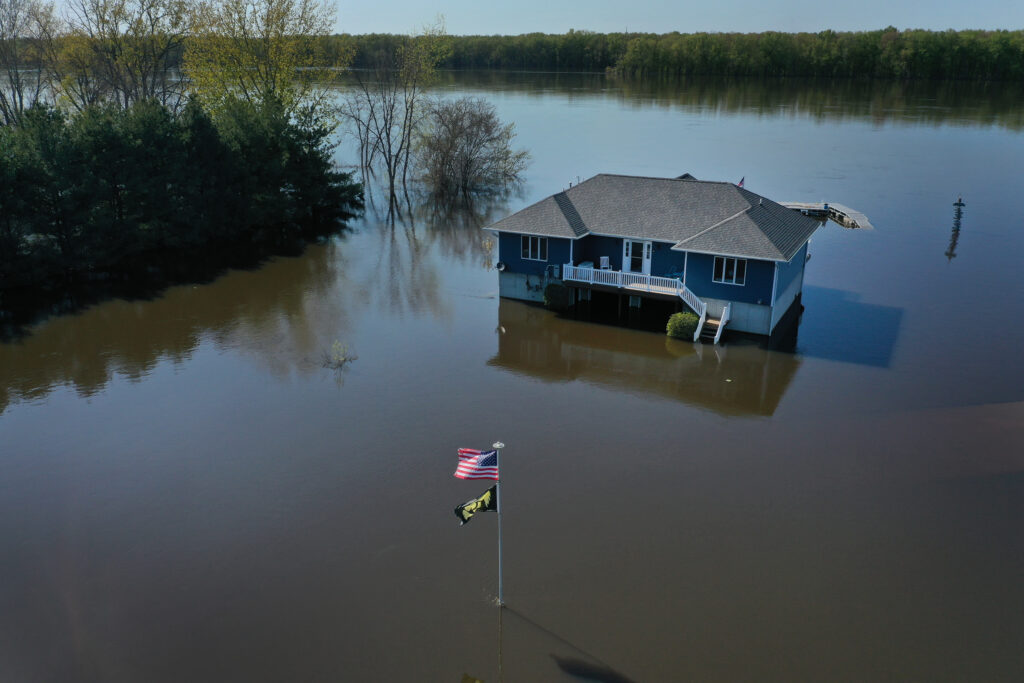
In a significant move against the financial repercussions of climate change, Illinois lawmakers are set to introduce a climate change superfund bill in the state legislature this session. This initiative aligns with a growing national trend where states are holding fossil fuel companies accountable for the escalating costs associated with global warming. As the impacts of climate change become increasingly visible—manifesting as higher home insurance premiums, rising utility bills, health costs, and record-breaking damage from extreme weather—local advocates are pushing for these corporations to contribute to climate “superfunds” aimed at supporting mitigation and adaptation efforts.
One of the key proponents of this bill is Illinois state Rep. Robyn Gabel, an Evanston Democrat, who articulated the urgency behind the legislation by citing the worsening risks posed by flooding and heat waves in the state. “The costs with climate change are going to be extravagant, and it’s going to end up on the backs of the taxpayers, and the oil companies continue to walk away with huge profits,” Gabel stated. “Polluting companies should be responsible for the damage they cause.”
To rally support for this “Make Polluters Pay” effort, advocates are organizing a demonstration in Chicago on Thursday morning, coinciding with a national week of action that includes events in states such as Connecticut, Colorado, California, New Jersey, and Maine. Notably, two states—New York and Vermont—have already enacted similar climate superfund laws, establishing a precedent for this type of legislative approach.
The urgency of such measures comes in the wake of the U.S.'s official departure from the Paris Climate Agreement, reflecting a broader trend of federal backsliding on climate policy. Additionally, persistent budget cuts to the Federal Emergency Management Agency (FEMA) are straining local governments, prompting advocates and Democratic lawmakers to seek state-level solutions. “It’s time for us to step up,” urged Gina Ramirez, director of Midwest environmental health at the Natural Resources Defense Council and part of the coalition backing the Illinois bill. “We’re a blue state, so we need to implement ways to improve infrastructure and health and combat climate change.”
Similar legislation is emerging across the nation—recently, a climate superfund bill was introduced in Rhode Island, while a council member in Washington, D.C. announced plans to study the financial implications of climate change on the city. In Maine, a superfund bill is advancing towards a full vote in the state Senate.
The rationale behind climate superfund bills is straightforward: the companies most responsible for climate change should bear the costs of its consequences. This concept draws from the 1980 Comprehensive Environmental Response, Compensation and Liability Act, known as Superfund, which mandates that companies accountable for toxic waste cleanup also contribute to rectifying environmental damage.
Polling by Data for Progress and Fossil Free Media indicates that this approach resonates with the public; 71% of likely voters support requiring oil and gas companies to pay a portion of climate-related damages.
However, these bills face opposition. Fossil fuel companies have challenged the New York and Vermont laws, and the U.S. Department of Justice has labeled them as “burdensome and ideologically motivated.” The American Petroleum Institute has reportedly prioritized fighting superfund legislation in its agenda, arguing that such laws would “bypass Congress and threaten affordability.” Despite this resistance, advocates remain steadfast. “We recognize that this is a David versus Goliath fight, but we’re not going to back down,” stated Cassidy DiPaola, communications director for Fossil Free Media. “It’s what the majority of the population wants, and it’s something that’s simple and fair and makes a lot of sense.”
The financial burden of climate change is becoming increasingly clear. According to the nonprofit Climate Central, the U.S. experienced 23 weather and climate-related disasters in 2025 alone, each costing over $1 billion. Cumulatively, these disasters incurred damages totaling $115 billion, adding to a staggering $3.1 trillion spent on climate-related disasters since 1980.
In Illinois, residents are already feeling the impacts. The state is grappling with escalating flooding, heat waves, and air pollution exacerbated by events like Canadian wildfires. State Sen. Graciela Guzmán, a Chicago Democrat and another co-sponsor of the superfund legislation, emphasized that the bill aims to create a fair system of accountability. “This bill is about setting a fairer standard for who pays when climate damage hits our towns and neighborhoods,” Guzmán stated in an email.
Community members like Ramirez, who experienced significant flooding in her home last summer, see the potential of the superfund climate bill to address such issues. Her basement was flooded with sewage for a week due to a broken sewer line during a storm. “This superfund climate bill would create revenue to fix the infrastructure and be able to combat all this bad stuff that’s happening,” she added.
As climate-related disruptions become more frequent and costly, there is a palpable momentum behind the push to make polluters pay. “People were looking at their insurance bills, they were looking at their utility bills, they were seeing the costs of climate damage and also everyday climate costs just really rising,” remarked DiPaola. “They wanted some accountability.”
UBS Executive Jones Shocking Move to StepStone: What This Means for Real Estate!

You Won't Believe How P.K. Yonge Boys Soccer Pulled Off This Shocking District Championship Win!

Is Watching Violent Videos on Social Media Destroying Your Mental Health? Discover the Shocking Truth from a Moorhead Psychologist!

Republican Josh Schoemann's SHOCKING Exit: What This Means for Wisconsin's Future!

Gong Cha's Shocking 2.0 Store Design: Will You Be Among the First to Experience 'Super Wu' Tech? Don’t Miss Out!

Fed's Shock Decision: What Wall Street's Mega Earnings Could Mean for Your Portfolio! Don't Get Left Behind!
You might also like: