Fed’s Shocking Move: Rates Unchanged! What This Means for Your Wallet and the Economy!

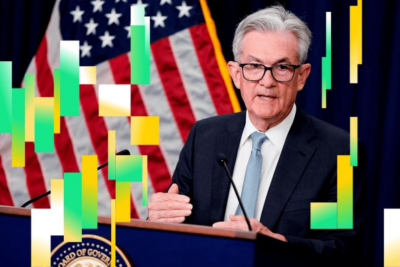
The Federal Reserve has decided to keep short-term interest rates unchanged following its first meeting of 2026, a choice that many economists anticipated. This decision comes on the heels of three consecutive 25-basis-point cuts in the latter half of 2025, bringing rates into a neutral range of **3.5% to 3.75%**. Fed Chair **Jerome Powell** announced this decision during a press conference on January 28, where he noted that the U.S. economy began the year “on a firm footing,” yet acknowledged ongoing concerns about **weak housing activity**.
At this meeting, the Federal Open Market Committee (FOMC) voted, with **10 members** supporting the decision and two dissenting. Governors **Christopher Waller** and **Stephen Miran** pushed for a rate cut, arguing for a **25-basis-point** decrease. Powell explained that while inflation has "eased significantly" since mid-2022, labor market growth remains subdued, leading to the decision to hold rates steady.
Given the context of the meeting, Powell indicated that the Fed will closely monitor future fluctuations in both labor market data and inflation. The next scheduled meeting is set for **March 17-18**. The Fed's choice to pause rate cuts comes amid increasing **geopolitical tensions** and uncertainty surrounding recent housing proposals, factors that have contributed to volatility in mortgage rates.
📰 Table of Contents
The Factors Behind the Decision
The Fed's reluctance to lower interest rates further is a reflection of the current economic landscape. Powell emphasized that a weakening labor market could warrant a rate cut, but cautioned that rising inflation could complicate this decision. “If inflation were at the same time getting worse, you just have a very difficult situation,” he said. This duality creates a complex environment for policymakers who must weigh various economic indicators.
Moreover, the potential for new tariffs is adding to the uncertainties. According to **Melissa Cohn**, **Regional VP at William Raveis Mortgage**, this unpredictability means the Fed will likely maintain current rates until further data supports a cut. Economists, including **Chen Zhao**, head of economic research at **Redfin**, forecast that mortgage rates are unlikely to see significant changes in the near future, especially as the Fed is not anticipated to adjust rates until at least summer.
In the last several weeks, **30-year fixed-rate mortgages** have experienced fluctuations due to external factors unrelated to the Fed's January decisions. **Jake Krimmel**, senior economist at **Realtor.com**, underscored that the Fed's influence over mortgage rates is limited, indicating that recent market movements were largely due to political and international factors rather than the central bank’s actions.
Political Context and Future Implications
Adding to the Fed's challenges, Powell is currently under investigation by the **U.S. Department of Justice (DOJ)**, linked to his testimony regarding plans to renovate the Fed’s headquarters. This scrutiny has raised questions about the independence of the Federal Reserve, a topic Powell addressed during the press conference. He stressed the importance of maintaining a distance from direct political influence on monetary policy, arguing that “to not have direct elected official control over the setting of monetary policy” is crucial for preserving the institution’s credibility.
Despite the ongoing investigation, Powell asserted, “we haven't lost it, and I don't believe we will.” This statement reflects the Fed's commitment to independence amid increasing pressures from various quarters, including political entities and economic stakeholders.
As the Fed navigates these complex dynamics, the upcoming months will be critical for assessing how economic indicators will influence monetary policy. With the housing market still considered "weak," the implications of sustained interest rates are significant for American homeowners and prospective buyers alike. The next steps taken by the Fed will have far-reaching effects on the economy, influencing everything from mortgage availability to consumer spending.
Why Bitcoin's Stuck at $89,000 While Gold Soars—Is This the End for Crypto Investors?

Is Bitcoin's 11,509 Coin Standoff Hiding a Shocking Secret That Could Cost You?

$5.95M Belton Estate's Shocking Auction: What Could You Win or Lose? Don’t Miss Out!

You Won’t Believe What Just Dropped: Silent Hill f PS5 Players Are Rushing to Claim THIS Shocking Free DLC!

Dabo Swinney's SHOCKING Claim: Is College Football Really in a DEATH SPIRAL? Find Out Now!

Is the 2026 Union II Schedule a Game-Changer? Shocking Insights You Can't Afford to Miss!
You might also like: