
Japan's LDP Surges in Polls: What Shocking Secrets Are Behind This Unexpected Popularity?

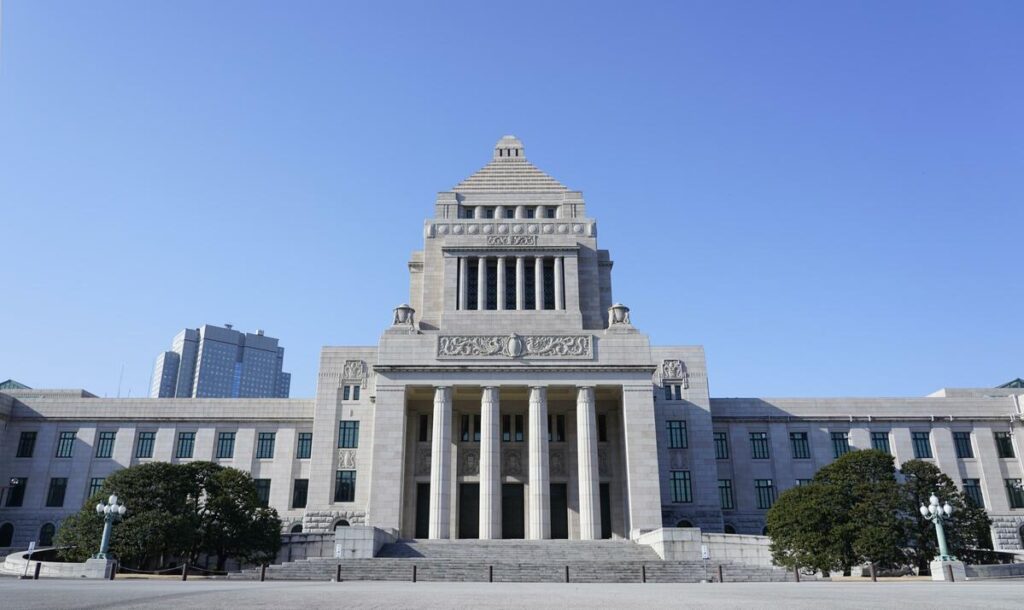
TOKYO – As Japan approaches its general election on February 8, the ruling Liberal Democratic Party (LDP), led by Prime Minister Sanae Takaichi, is maintaining a significant lead over a newly formed opposition party, the Centrist Reform Alliance, according to a recent poll conducted by Kyodo News. The survey, carried out this past weekend, shows that 29.2 percent of voters favor the LDP for the proportional representation part of the election, while the Centrist Reform Alliance comes in second with 11.9 percent.
Takaichi's approval ratings have slightly dipped, showing 63.1 percent support, down from 67.5 percent in December. Meanwhile, her disapproval rate has risen to 25.0 percent, up from 20.4 percent. The upcoming election will be the first under her leadership, following the dissolution of the powerful House of Representatives.
Voters will have two ballots: one for selecting a candidate in their local constituency and another for choosing a political party. The poll indicates that 40.0 percent of respondents plan to vote for ruling coalition candidates in single-seat constituencies, while only 22.8 percent favor candidates from opposition parties. However, a noteworthy 34.9 percent remain undecided.
In this evolving political landscape, the Democratic Party for the People currently ranks third with 8.4 percent support, followed closely by the Japan Innovation Party (JIP) at 5.5 percent. The Sanseito party, experiencing a surge in popularity during last year's House of Councillors election, stands fifth with 4.3 percent. However, a considerable 27.8 percent of respondents express uncertainty about their voting choice.
The upcoming election serves as a critical test for the newly formed Centrist Reform Alliance, which is a merger of the Constitutional Democratic Party of Japan and the Komeito party. This merger occurred after Komeito severed its long-standing alliance with the LDP last October, reshaping Japan's political dynamics. Yet, the poll reveals a notable skepticism towards this new opposition, with 67.0 percent of respondents lacking confidence in its ability to present a viable alternative, compared to only 28.2 percent who are optimistic.
Takaichi has justified the snap election by emphasizing the need for a public mandate to execute her policies, which include strategic investments in crisis management and strengthening Japan's defenses. However, her decision is met with mixed feelings: approximately 47.3 percent of respondents oppose the election's timing, while 44.0 percent support it.
As official campaigning is set to commence on Tuesday, both ruling and opposition parties are already making promises to alleviate the financial burden on households. They are advocating for the suspension or abolition of the consumption tax on food items, a topic that resonates deeply amid rising living costs. Public sentiment on this issue is nearly evenly split, with 24.8 percent favoring a temporary tax reduction and 24.0 percent preferring a permanent solution. Nonetheless, 59.3 percent of respondents indicate that inflation relief measures are their top priority for the election, surpassing concerns for social security (26.8 percent), economic and employment conditions (19.3 percent), and diplomacy and security policy (18.7 percent).
The upcoming election not only reflects the current political landscape in Japan but also highlights the challenges that both the ruling and opposition parties face in addressing the pressing economic concerns of voters. As the political environment shifts, the outcomes could reshape future governance and policy-making in Japan.
Schools Across America Are Banning Smartphones—Find Out Why Thousands Are Furious!

Healthy Teens Are Dying From the Flu: Are You Protecting Your Family? Shocking Stats Inside!

You Won't Believe What Happened at the 2020 Washington Mardi Gras - Shocking Secrets Revealed!
Is Your Browser Putting Your Personal Data at Risk? Discover the Shocking Truth Before It's Too Late!

Retired Teachers Reveal Shocking Secrets at Monthly Luncheon—You Won’t Believe What They’re Planning!
Myanmar's Election Ends: Shocking Turnout Numbers and Unseen Chaos – What You Must Know NOW!
You might also like: