
Is a Record-Breaking Arctic Blast Hitting North America a Dire Sign of Climate Change? Find Out Now!

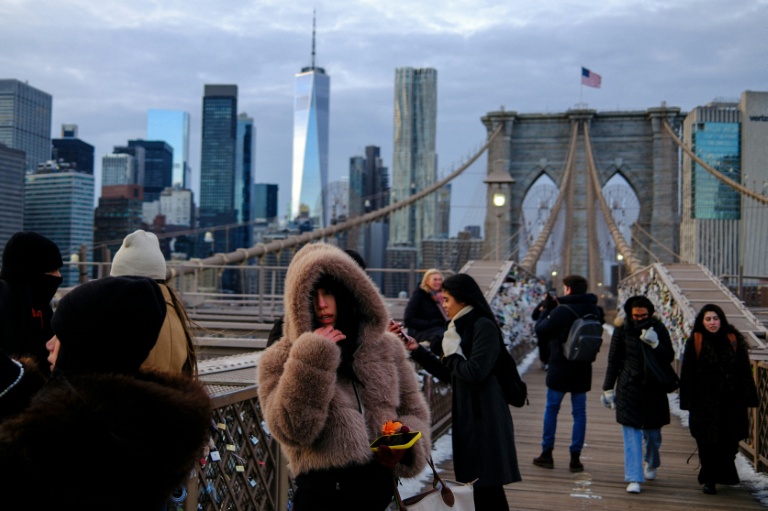
As Winter Storm Fern approaches, over 160 million Americans brace for an extraordinary winter blast fueled by an extended "polar vortex." This storm is expected to blanket a vast region stretching from Texas and the Great Plains to the mid-Atlantic and northeastern states, bringing heavy snowfall and freezing rain.
The polar vortex, a large area of cold, low-pressure air that typically circulates in the Arctic, plays a crucial role in winter weather patterns. Under normal circumstances, it maintains a compact, circular formation, effectively keeping the coldest air confined to high northern latitudes. However, meteorological phenomena can disrupt this balance. “Usually the vortex spins merrily along and has little effect on our weather, but occasionally it moves or stretches southward over North America, bringing with it a jolt of cold,” explained Jennifer Francis, a senior scientist at the Woodwell Climate Research Center.
When the polar vortex stretches, it can lead to significant cold air incursions further south than usual. Atmospheric waves can trigger this stretching, creating a more oval shape rather than a compact circular one. “Think of it like a rubber band being pulled,” stated Judah Cohen, a climate dynamics scientist at MIT. This stretching allows frigid Arctic air to plunge into regions that typically experience milder winters, as is the case this week across the United States.
These atmospheric disruptions have raised questions about their relationship to climate change. The Arctic is warming significantly faster than the global average, a phenomenon known as Arctic amplification, which many scientists agree is largely driven by human-caused climate change. Cohen noted that this uneven warming intensifies large atmospheric waves over Eurasia, thereby increasing the chances of the polar vortex spilling its frigid air into North America. “Studies suggest these aberrations in the vortex are happening more often in a warming world, which favors more frequent winter extremes,” said Francis.
However, the connection between these polar vortex disruptions and climate change remains a subject of debate among scientists. Jason Furtado, a meteorologist at the University of Oklahoma focusing on long-range forecasting, indicated that while data from the past two decades show an increase in such stretching events, it's challenging to draw long-term conclusions about their direct ties to climate change. “In my opinion, it’s harder to make that connection going out much further, simply because I think we just don’t have enough data,” he cautioned.
As Winter Storm Fern prepares to unleash its fury, Americans are reminded of the intricate interplay between atmospheric science and the changing climate. This storm serves as both a stark reminder of winter's ferocity and a potential indicator of shifting weather patterns influenced by broader climatic changes.
You Won't Believe How the Griffins Went From 0-3 to a Shocking 3-1 League Start—Here’s What Happened!

MLS Shocker: Transfer Window Expansion Could Change Your Favorite Team's Fate Forever! Don’t Miss This!

You Won't Believe How Kent Richeson Plans to Transform Startup Dreams—Is Your Idea Next?

Trinity Health's Shocking Decision: 500+ Elective Surgeries Canceled—What Does This Mean for You?
You'll NEVER Guess What This Celebrity Did That Got Them Banned! Shocking Details Revealed!

You Won't Believe What Mondelēz International is Offering — Apply Now or Miss Out!
You might also like: