
Trump’s Shocking Warning: “Soon, People Will Face Prosecution!”—Who’s in His Crosshairs?

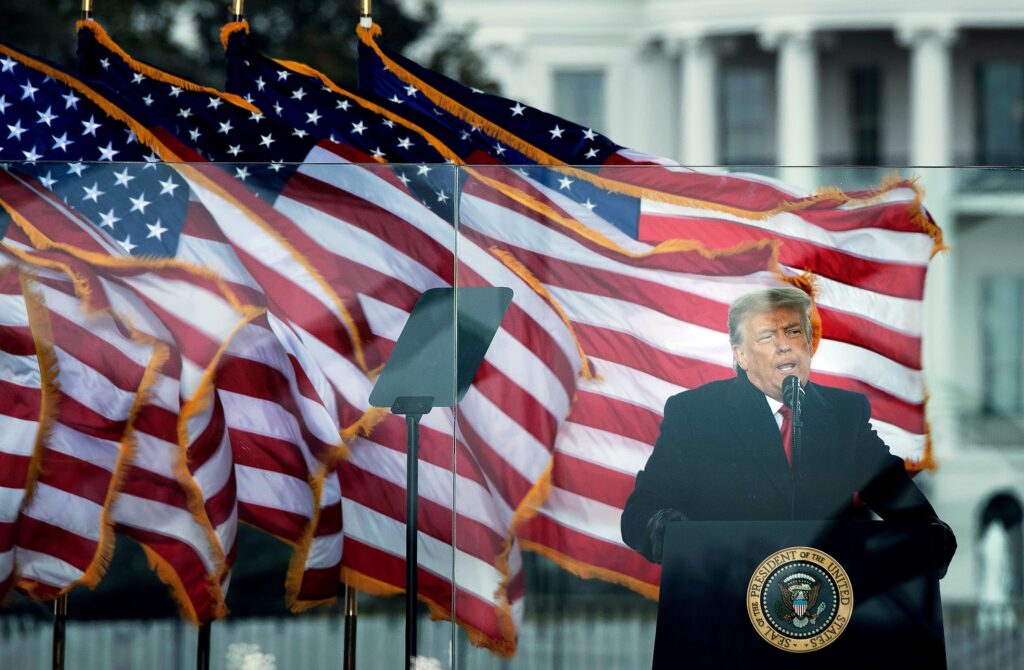
On the anniversary of his second inaugural, former President Donald Trump held a press conference at the White House that showcased one of his enduring preoccupations: the claim that the 2020 election was stolen from him. During a lengthy discussion about border policies, Trump abruptly pivoted to his familiar refrain, declaring, “It was a rigged election. Everybody knows that now. And by the way, numbers are coming out that show it even more plainly. We caught them. We caught them.”
However, this claim lacks any factual basis. There are no credible “numbers” surfacing to support Trump’s assertions, and no evidence has been presented that anyone has been “caught” engaging in electoral fraud. In fact, Trump’s statements appear entirely fabricated, despite his fervent belief in them.
The day after his press conference, at the World Economic Forum in Davos, Switzerland, Trump reiterated the same unsubstantiated claims, adding a new twist. After briefly commenting on Russia’s war in Ukraine, he returned to his electoral grievances: “It was a rigged election. Everybody now knows that, they found out. People will soon be prosecuted for what they did. It’s probably breaking news.”
This statement raises questions about the veracity of Trump’s claims regarding potential prosecutions, especially considering the White House's historical control over the Justice Department. Nonetheless, there is little reason to take Trump’s word at face value. His record of misleading statements is well-documented, and investigations have yet to reveal any substantive evidence of wrongdoing related to the 2020 election—aside from actions taken by Trump and his allies.
Contextually, Trump has been increasingly vocal about conspiracy theories surrounding the election. On that same Tuesday, he used his social media platform to promote unverified allegations involving Dominion Voting Machines and their alleged connection to his electoral defeat. Earlier in January, he mentioned to The New York Times that he regretted not taking control of voting machines during the immediate aftermath of the election.
Adding to the surreal nature of his allegations, Trump previously assured a group of supporters that “truckloads” of evidence would soon emerge to substantiate his claims of a stolen election. As of now, the public is still waiting for this promised evidence.
Trump's fixation on the 2020 election raises broader implications for the political landscape in the United States. His persistent assertions serve to mobilize a base that remains loyal to him, often regardless of factual accuracy. This dynamic not only complicates national discourse but also poses challenges for those seeking to promote electoral integrity and trust in democratic institutions.
As Trump continues to dominate headlines with these claims, the impact on American politics cannot be understated. His rhetoric may undermine confidence in future elections, particularly among his supporters who may feel disenfranchised if their views are not reflected in mainstream narratives.
In summary, the former president’s ongoing claims about the 2020 election serve as a reminder of the continuing divisions within the American electorate. With each pronouncement, Trump not only reinforces his narrative but also stokes the flames of controversy around electoral integrity—issues that will likely reverberate in future political cycles.
Is Your Dream Home Slipping Away? White House Unveils Shocking New Affordability Plans!

Veterans and Non-Traditional Learners: Discover How This Shocking Partnership Could Change Your Future!

Why Abortion Is Set to Become the Hottest Debate of 2024—You Won’t Believe What’s at Stake!

Democratic AGs Issue URGENT Warning: Are You Prepared for the 2026 Election Battle? Shocking Details Inside!

Real Estate Transfer Fee DOOMED? Shocking New Numbers That Could Cost YOU Thousands!

20 Jaw-Dropping Vintage Photos That Reveal the Shocking Truth About Pre-Smartphone Work Life!
You might also like: