
Trump’s Shocking New Strategy: Will Nevada Homebuyers Lose Everything to Corporations?

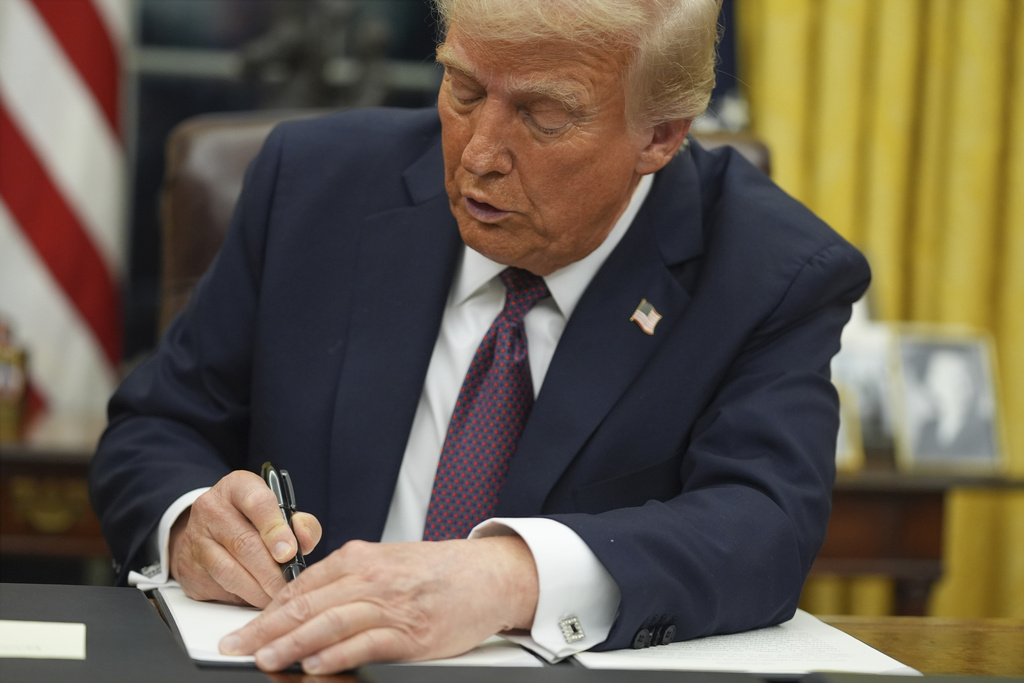
When President Donald Trump recently announced plans to curb corporate investors from purchasing single-family homes, reactions ranged from concern among lawmakers in his own party to relief among many Nevadans, particularly Democrats. For many in the Silver State, the proposal feels like a long-overdue acknowledgment of a growing issue: housing affordability.
“My initial thought process was, ‘OK, is he working with both sides of the aisle to come together for a bill?’” remarked Maurice Page, Executive Director of the Nevada Housing Coalition, in an interview with The Nevada Independent. “Because this has been a bipartisan issue, especially in the state of Nevada, for a while now.”
Trump solidified his commitment with an executive order aimed at preventing the government from supporting the sale of single-family homes to large institutional investors. This order not only directs his administration to review regulations regarding corporate ownership but also emphasizes the enforcement of antitrust laws concerning institutional investors, while suggesting future legislative recommendations on the matter. In his words, “People live in homes, not corporations. My Administration will take decisive action to stop Wall Street from treating America’s neighborhoods like a trading floor and empower American families to own their homes.”
This policy resonates particularly in battleground Nevada, where recent polling indicates that housing affordability is a top concern for residents, second only to the economy. At the national level, both major parties have pointed fingers at institutional investors for exacerbating the housing crisis. A 2025 survey found that an overwhelming 93 percent of Americans believe that corporate landlords are making homeownership less accessible.
Data from the Government Accountability Office highlights a troubling trend: purchases of single-family homes by institutional investors have been particularly concentrated in the Sunbelt region, with reports suggesting that approximately 25 percent of Nevada’s single-family homes are investor-owned.
Efforts to tackle this problem at the state level have struggled to gain traction. In 2023, Governor Joe Lombardo (R) vetoed a bill aimed at capping corporate ownership, and subsequently blocked a more stringent proposal in 2025 that sought to impose limits on corporate home purchases. A bipartisan initiative that aimed to restrict corporate ownership to 1,000 units ultimately failed to pass the Legislature last year after concerns were raised about its rushed implementation.
State Senator Ira Hansen (R-Sparks) co-sponsored that measure alongside Assemblywoman Alexis Hansen (R-Sparks). Despite their previous support, Alexis Hansen ended up casting the deciding vote against the bill after critics voiced concerns. Both lawmakers expressed support for Trump’s executive order in a joint statement this week.
While the efficacy of Trump’s initiative remains uncertain, experts have raised questions about its practical implications for Nevadans. Brian P. Bonnenfant, project manager at the University of Nevada, Reno’s Center for Regional Studies, noted that the executive order lacks specific thresholds for corporate ownership of single-family homes, and that Nevada companies could potentially circumvent these limits by forming new limited liability companies. He raised the possibility that reduced investor demand for properties could actually hinder new construction, suggesting that much of the institutional investment might have already occurred. “They’re really late to the party,” he said. “When we are now in the area of 2 percent appreciation rates, it really doesn't make sense for corporate investment in single-family homes.”
Despite the uncertainties, Nevada politicians are seizing the momentum at the federal level. Senators Jacky Rosen (D-NV) and Steven Horsford (D-NV) have penned a letter to Trump urging him to support their Housing Oversight and Mitigation Exploitation (HOME) Act. This legislation seeks to make it illegal to charge unreasonable prices for housing and would enable the Department of Housing and Urban Development (HUD) to analyze data on institutional investors. Horsford, acknowledging the political stakes in his district, noted, “My bill, the HOME Act, is the only ready-to-go legislation that accomplishes what his post talked about.”
Rosen has long advocated for this cause, stating, “Affordable housing is out of reach for far too many Nevadans, and part of the problem is bad actor corporate investors who buy up homes and drive up prices.”
Representative Susie Lee (D-NV), who represents one of the most competitive districts in the state, echoed their sentiments. She emphasized the need for more than temporary measures, asserting, “While the President’s decision to take action to protect families and expand access to homeownership is a step in the right direction, we must provide more than temporary assistance.”
The White House has yet to confirm whether it plans to collaborate with Rosen and Horsford. However, a spokesperson indicated that the administration remains committed to enhancing housing affordability for Americans affected by rising costs, stating, “President Trump pledged to improve housing affordability for Americans still reeling from Joe Biden’s economic disaster.”
Political dynamics regarding corporate landlords are complex, yet they unite leaders across the spectrum. Although corporate landlords are often cited as villains, the broader issue of housing affordability in Nevada also hinges on other factors, including the supply of available homes. Bonnenfant noted that unlocking federal land for development could be a critical piece of the puzzle.
The implications of Trump’s recent proposal may also extend to the state’s highly competitive gubernatorial race. Democratic candidates are already aligning themselves with Trump’s efforts. Attorney General Aaron Ford, widely seen as a frontrunner for his party’s nomination, expressed cautious optimism about Trump’s executive order, stating, “I believe any work to limit corporate homeownership is a step in the right direction towards making housing more affordable in Nevada.”
In a statement, Governor Lombardo has indicated his support for the President’s initiative while developing a working group to address the issue at the state level.
As the administration gives the Treasury Secretary 30 days to outline definitions to implement the order, ordinary voters are likely focused on one key outcome: reducing costs. “When I talk to folks, regular Nevadans, they just want to see things go down in cost,” Page concluded.
Mel Kiper Jr. SHOCKS Raiders Fans with Explosive Take on Fernando Mendoza—You Won’t Believe What He Said!

Micron's $1.8 Billion Gamble: How This Shocking Acquisition Could Change the Tech Game Forever!

Guinea-Bissau's Election Date Set: Will This Trigger Another Coup? Shocking Secrets Revealed!

Madison’s Election: 7 Shocking Secrets That Could Change Everything on April 7!

8 Shocking Ways Boomers Are Clinging to Obsolete Traditions—You Won't Believe #5!

You Won't Believe How Hancock Dominated SBCC—The Shocking First Half That Changed Everything!
You might also like: