
Drew McIntyre’s Shocking 5-Hour Workout Routine: What He Does to Stay Undisputed Champion!

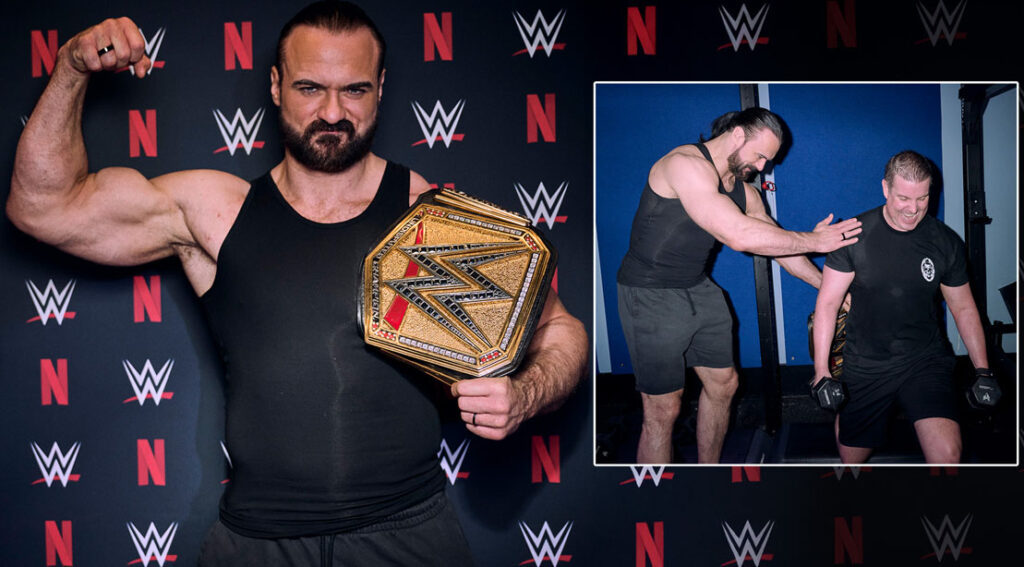
WWE’s Undisputed Champion, Drew McIntyre, is a physical marvel, standing at 6'5" and weighing around 275 pounds. Known for his impressive physique, he combines strength with agility, making him a formidable competitor in the ring. During WWE's “Road to Royal Rumble” tour across England, I had the unique opportunity to train with McIntyre at BXR Gym, a cutting-edge fitness facility located in Marylebone, London, owned by boxing legend Anthony Joshua. This experience was both exhilarating and daunting, as McIntyre put me through a grueling workout routine that mirrored the physical demands of professional wrestling.
Having known McIntyre for over 25 years, I anticipated a challenging session. I had witnessed his rise from performing in small venues to headlining events like WrestleMania. However, I quickly realized that my familiarity with him wouldn't spare me from the intensity of his training regimen. Our session was designed as a full-body circuit, a clever choice given the similar demands of a WWE bout. As McIntyre wryly stated, “Pain is pleasure, pain is beauty,” I braced myself for what lay ahead.
Inside Drew McIntyre’s Workout Regimen
The workout was initially framed as an EMOM (Every Minute on the Minute) routine, where each exercise would last for 30 seconds, followed by a 30-second rest. However, McIntyre, embodying the unpredictability of wrestling, had other plans. The exercises included:
- Bicep Curls
- Lying Dumbbell Chest Press
- Goblet Squats
- Plank
- TRX Low Row
- Dumbbell Bulgarian Split Squat
- Dumbbell Seated Shoulder Press
- Weighted Plate Russian Twists
Right from the start, McIntyre made it clear that in his training sessions, time is merely a suggestion. “Time doesn’t exist,” he teased, pushing me to keep going as I tried to catch my breath. The rigorous nature of WWE matches means that athletes like McIntyre train as though there are no limits on time or repetitions. Consider this: when facing off against opponents like Brock Lesnar or Roman Reigns, there’s no limit to the physicality and endurance required.
The bicep curls were particularly challenging, as McIntyre encouraged me to keep going with phrases like, “More, more.” At one point, he compared my struggling arms to his own muscular build, saying, “About 50,000 more curls, and we’ll be ready to compete.” The atmosphere was intense but also laced with humor, making the ordeal somewhat bearable.
As the workout progressed, the sweat began to pour, and the intensity ramped up. While I thought I had reached my limit during the TRX suspension exercises, McIntyre had other ideas. “If you can do two, you can do three more,” he prodded, shifting the goalposts as I struggled to keep pace. It became evident that quitting wasn’t an option—a lesson that resonates deeply in the wrestling world.
During the weighted Russian twists, each 30-second segment felt endless as McIntyre announced, “I’m timing you—five minutes left.” His mantra of “I don’t do reps, I do time,” was both motivating and intimidating. At one point, I collapsed, feeling the weight of exhaustion, and he simply bellowed, “I didn’t say stop.” Despite the brutal nature of the workout, it was clear that McIntyre's challenging methods were all in good fun, aimed at pushing limits and realizing one’s potential.
Training for the rigors of WWE is no easy feat. It requires not just physical strength but also mental resilience, pushing oneself beyond perceived limits. This is a lesson for anyone, not just aspiring wrestlers. As I lay on the gym floor, I reflected on how McIntyre's approach highlights the broader challenges athletes face, both in and out of the ring.
WWE Raw streams on Netflix in the U.S., while in Canada, the UK, and Ireland, fans can catch SmackDown, NXT, and premium live events like the Royal Rumble on January 31st. U.S. viewers can watch the Royal Rumble via ESPN.
For fans interested in following McIntyre's journey, you can find him on social media platforms like Instagram, where he shares insights into both his career and training methodologies.
Gen Z is Ditching Diets: Discover the Shocking Foods That Boost Your Mood and Health!

Why OpenEvidence's Shocking $250M Fundraise Could Change Your Healthcare Forever!

Real Estate Experts Torn: Is Trump’s Housing Plan a Game-Changer or a Disaster? Find Out Now!

Samsung's Shocking Fall: How One Brand Steals the Spotlight in India’s Cooling Smartphone Market!

You Won't Believe How This $499 Smartphone Doubles as a Projector—Is Your Phone This Powerful?

Are You Missing Out? Discover the Top 5 USA Real Estate Markets for Quick Profits Before They Skyrocket!
You might also like: