Is Your Carbon Footprint Hiding a Shocking Truth? Discover the Hidden Impact NOW!

As climate change continues to dominate global conversations, understanding individual contributions to carbon emissions becomes increasingly crucial. A recent study focused on the United Kingdom's household carbon footprints (CFs) explores the methodologies used to estimate these emissions, aiming to illuminate the complex relationship between personal behaviors and climate action capabilities.
In addressing the research question of how to accurately estimate individual household CFs and the ability to mitigate emissions, the study highlights a significant discrepancy in existing estimates. Since 1990, household emissions in the UK have generally declined, yet estimates of average annual emissions per person vary widely. For instance, the UK’s Climate Change Committee attributes approximately 40% of emissions to householders, while the Office for National Statistics (ONS) places that figure at 27%. The ONS reports an average household carbon footprint of 7.3 tons of CO2 equivalent (tCO2e), excluding emissions from exports, aviation, and shipping. In contrast, earlier studies have reported higher emissions; for example, Druckman and Jackson found an average of 26 tCO2e per household using 2004 data, while Buchs and Schnepf reported an average of 20.18 tCO2e for 2006-2009.
The study's methodology also aimed to assess what it termed "carbon capability" (CC), a framework designed to evaluate individuals' attitudes, knowledge, skills, choices, behavior, and engagement with climate governance. Previous research, such as a 2022 survey by Hampton and Whitmarsh, indicated that while CC was slowly improving, it still fell short of national climate objectives. Researchers anticipated finding that individuals with higher capability scores would generally have lower carbon footprints.
To measure CC, the survey focused on six key domains: household energy, transportation, food, shopping, influence, and citizenship. Each domain was further divided into four components: individual traits (attitudes, values, skills); choices and behavior (specific practices impacting emissions); structural capacity (access and affordability of alternatives); and broader engagement (alignment with social norms and policies). Respondents answered 72 questions distributed evenly across these domains, with scores calculated using a standardized matrix. Each response was recorded on a seven-point Likert scale.
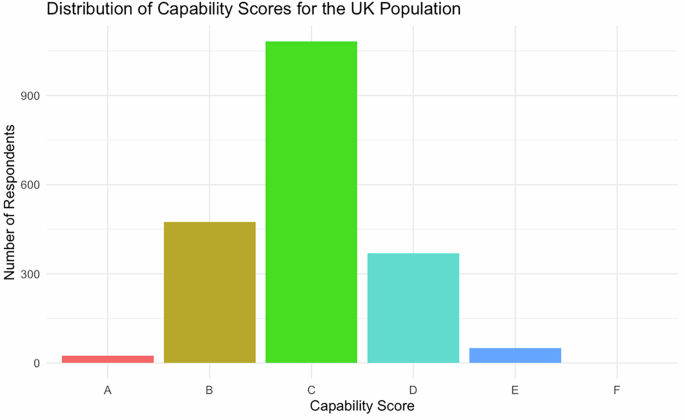
The overall capability score ranged from -216 to +216, converted into letter grades (A–F) for clarity. This method allowed for a straightforward comparison of capability across different consumption domains, recognizing that people's attitudes and social contexts significantly shape their behaviors.
Yet, the study also identified substantial gaps in the rigor and transparency of personal CF calculators. These tools often struggle to balance user-friendliness with data accuracy. As Padgett et al. and Birnik pointed out, many calculators lack consistency and are overly reliant on generic datasets. In response, the researchers adhered to principles proposed by Birnik, ensuring their methodology incorporated multiple greenhouse gases (GHGs), adjustments for household size and income, and up-to-date, region-specific data.
When assessing household energy use, the study utilized data from the Smart Energy Research Lab, which includes insights from nearly 13,000 UK households. By employing predictive models, the researchers aimed to achieve more accurate estimations of energy consumption based on factors like socio-demographic variables and behavioral predictors.
Transportation emissions were calculated based on respondents’ reported travel hours, measured against average speeds from the UK Department of Transport. This approach allowed for an accurate estimation of emissions based on the type of vehicle and distance traveled. Notably, the methodology accounted for both personal and business travel, emphasizing the multifaceted roles individuals play in contributing to climate change.
The dietary habits of respondents were also examined, categorizing their diets into six distinct types and adjusting for caloric intake differences between genders. This nuanced approach allowed for a more tailored assessment of food-related emissions. Additionally, the survey explored food waste, applying multipliers to account for individuals' tendencies to underestimate their waste.
Finally, the shopping domain assessed respondents’ spending patterns on new products and services. By utilizing data from the ONS and applying consumption factors from the UN Statistics Division, the study aimed to provide comprehensive insights into how lifestyle choices contribute to overall carbon footprints.
The research, conducted in June-July 2024 by survey company Dynata, included 2,001 respondents and was designed to be representative of the UK population based on gender, age, region, race, and education. The findings underscore the importance of creating robust methodologies for calculating both individual carbon footprints and capabilities, as these metrics are vital for effectively addressing the climate crisis.
In conclusion, as the UK and indeed the world grapple with the impacts of climate change, understanding the interplay between individual actions and systemic factors is critical. This study not only sheds light on the complexities of measuring emissions but also emphasizes the need for informed action and engagement in climate governance to achieve meaningful environmental change.
Unbelievable Safety Tech: 3 Game-Changing Tools Trucking Giants Won’t Want You to Miss!

Yakima Valley's February Election: 5 Shocking Secrets Voters MUST Know NOW!

Is Mike McDaniel About to Turn the Chargers into NFL Giants? Shocking Stats Inside!

You Won't Believe How 2 Wild Parties a Month Could Add 10 Extra Years to Your Life!

Ducks Shockingly Crush Tigers 5-0: The Hidden Secrets Behind Their Unstoppable Victory!

You Won't Believe What Shocking Discoveries Await on the Arcata Marsh Tours This Weekend! Don't Miss Out!
You might also like: