
Trump's Legal Woes Could Ignite a $100 Billion Offshore Wind Revolution—Are You Ready for the Shift?

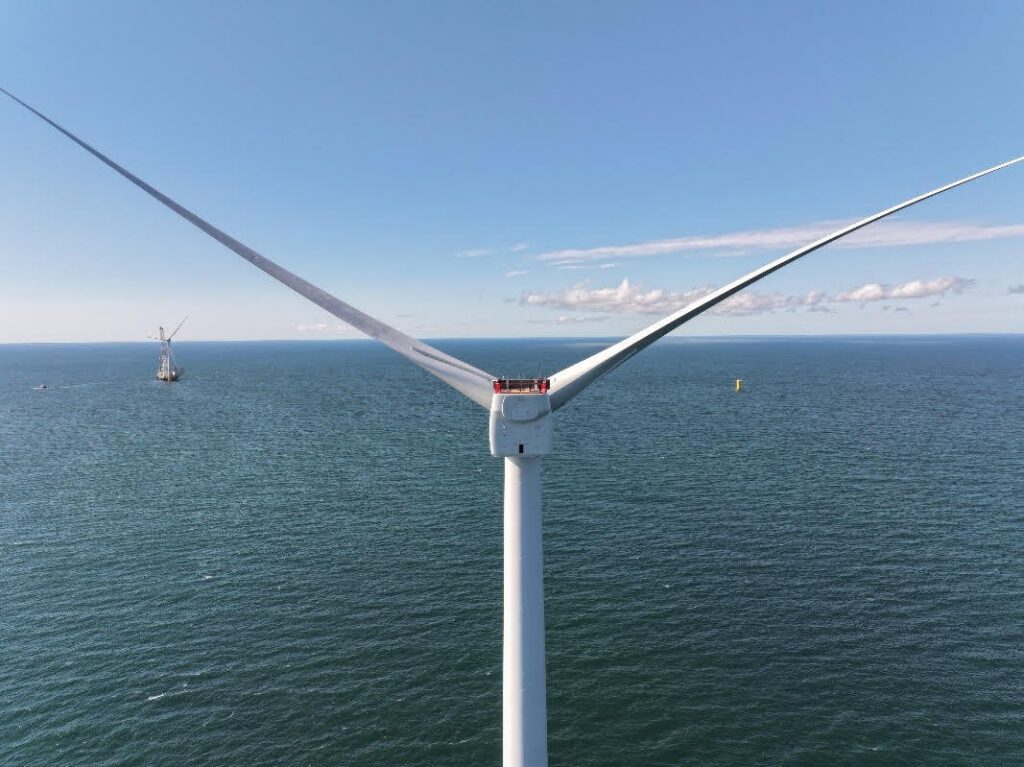
The Trump administration faced significant legal challenges this week as judges ruled in favor of resuming construction on several offshore wind farms along the East Coast. The projects, which had been temporarily halted due to national security concerns, include Revolution Wind off Rhode Island, Empire Wind off New York, and Coastal Virginia Offshore Wind off Virginia. Together, these projects represent a combined generating capacity of 6 gigawatts.
In December, the Department of the Interior issued a stop-work order affecting five offshore wind projects, citing potential interference with radar operations as the primary concern. This moratorium was set to last for 90 days, prompting developers to file lawsuits almost immediately. The government argued that allowing construction might compromise national security, yet many stakeholders believe the concerns could be addressed through project modifications and upgrades to radar technology.
During court hearings in Virginia and Washington, D.C., judges expressed skepticism about the government's rationale. U.S. District Judge Carl Nichols, appointed by Trump, noted that the government's arguments did not adequately address claims made by Equinor, the developer behind Empire Wind, which characterized the Interior Department’s order as “arbitrary and capricious.” Nichols pointed out, “Your brief doesn’t even include the word arbitrary," indicating a lack of thorough reasoning behind the halt.
Similar sentiments were echoed by U.S. District Judge Jamar Walker, who presided over the lawsuit filed by Dominion Energy, the developer for Coastal Virginia Offshore Wind. Judge Walker questioned the broad nature of the stop-work order in relation to the specific project in Virginia, suggesting that it might have been unnecessarily sweeping.
While construction has resumed on three projects, two others remain in limbo. Ørsted, which is developing Sunrise Wind, has a hearing scheduled for February 2, and Vineyard Wind 1 recently filed its lawsuit, further delaying progress in the sector.
The potential of offshore wind energy on the East Coast is considerable. According to a 2024 study published by the Department of Energy, it could deliver up to 110 gigawatts of generating capacity by 2050. This influx of renewable energy is vital for densely populated areas, particularly in the Northeast, where electricity costs are among the highest in the nation. As rising electricity prices have drawn scrutiny, offshore wind presents one of the most economical options for new energy generation.
Nationally, offshore wind could produce an astonishing 13,500 terawatt-hours of electricity annually, which is three times the current consumption rate in the United States. This massive potential positions offshore wind as a critical player in the transition to renewable energy, aligning with broader goals of reducing greenhouse gas emissions and enhancing energy independence.
The recent judicial decisions highlight a growing momentum in favor of renewable energy projects, despite the current administration's mixed stance on wind energy. President Trump himself has been vocal about his disapproval of wind energy, stating at a recent event, “I’m not much of a windmill person,” during a conversation with oil executives. However, the courts seem to be signaling a shift towards prioritizing renewable energy development as a crucial component of the United States' energy future.
As these legal battles unfold, the implications for energy policy, job creation, and the environment remain significant. The successful resumption of construction on these offshore wind projects may pave the way for a more sustainable and economically viable energy landscape in the coming decades.
NBA's Bold Move: How Soccer Fans Could Change the Game Forever – Are You Ready to Be Shocked?

Shoremen's Shocking 12-Point Collapse: What the Mules Did That Left Fans Speechless!

You Won't Believe the 5 Shocking Fitness Tech Trends Unveiled at CES 2026! Are You Missing Out?

Discover How MediaTek's Shocking New Chips Could Change Your Smartphone Game Forever!

4 Android Phones That Outperform the Pixel 10 Pro—#3 Will Leave You Speechless!

You Won't Believe the SHOCKING Turn of Events in Bills vs. Broncos: Who Will Survive the NFL Playoffs?
You might also like: