
You Won't Believe How One Injured American Tennis Star Shocked Everyone at the Australian Open!

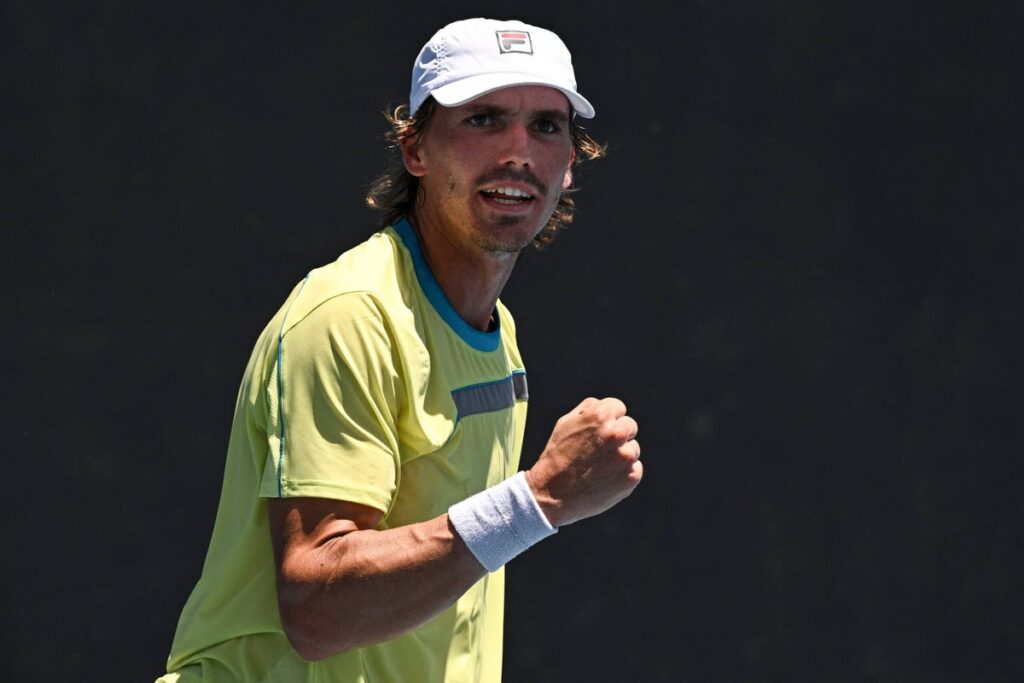
From the vibrant courts of College Station, Texas, the American tennis scene continues to witness the emergence of late-blooming talents. The latest to gain attention is 26-year-old Patrick Kypson, who is beginning to carve out his path in the professional arena following years marred by injuries and setbacks.
Kypson's journey in tennis reflects a growing trend among players who find their legs in college before transitioning to the professional circuit. In October 2025, fellow Texas A&M alum Arthur Rinderknech broke into the top 30 ATP rankings for the first time, reaching No. 27 after an impressive run to the final of the Shanghai Masters. There, he faced off against his cousin, Valentin Vacherot of Monaco, who clinched the title at No. 204 in the world, defeating 24-time Grand Slam champion Novak Djokovic along the way. This victory marked Vacherot's first ATP Tour title at the age of 26.
While Kypson may have only spent one semester at Texas A&M in 2018, he has significant ties to these players, having lived with Rinderknech and formed a close bond with Vacherot. Despite his promising potential, injuries have hampered his progress. However, recent performances hint at a resurgence. Last fall, while Rinderknech and Vacherot competed in Shanghai, Kypson fought for a wild card entry into the main draw of the Australian Open.
Between late September and early November, Kypson participated in five ATP Challenger Tour events, making the finals in three and winning two of them, while also reaching the semifinals in another. His efforts earned him the coveted U.S. wild card for the first Grand Slam of the year, a ticket typically granted to the best-performing American player whose ranking does not secure direct entry.
What has changed for Kypson, who once seemed destined to be sidelined permanently by injuries? He attributes his recent successes to finally being free of injuries and adopting a new mindset. “I’m just trying to take this mindset that I’ve been working on for the last six months and judge myself on that, as opposed to winning and losing the match,” he explained in December. “If I can do that and execute on it well, then, ironically, I think that’s the best.”
Kypson represents a new wave of players who have learned that the path to professional tennis can begin in college. Steve Denton, a former pro and longtime coach at Texas A&M, shared insights on Kypson's potential, stating, “He has a high tennis IQ, great shot selection, a big forehand he uses effectively, good hands around the net, and an improving transition game.” Nevertheless, Denton emphasized the need for physical maturity to withstand the rigors of a professional career, a challenge that has affected many players transitioning from college.
Kypson's experience is a testament to this struggle. After winning the U.S. boys’ national championship in Kalamazoo, Michigan, in 2017, he was eager to leap into a professional career. He quickly left Texas A&M, but shortly thereafter faced a string of injuries, starting with stress fractures in his elbow just six months into his pro career. The COVID-19 pandemic halted play in 2020, and subsequent years saw him undergo elbow surgery and deal with a torn oblique muscle, among other setbacks.
Despite these challenges, Kypson managed to qualify for both the 2023 French Open and the 2024 Australian Open. However, another injury—a meniscus tear during Wimbledon qualifying—forced him to undergo surgery. Rushing his recovery to qualify for the U.S. Open resulted in ongoing knee pain, a reminder of the consequences of his hurried return.
Reflecting on his journey, Kypson acknowledges his tendencies to over-train, which may have contributed to his injuries. “I have the tendency to over-train, to push too hard,” he said. “I obviously can’t give that direct correlation to injuries that I’ve had, but it’s certainly possible that there’s things I’ve done and hours I’ve put in that maybe I shouldn’t have, that contributed to the injuries.”
Looking toward the future, Kypson is focused on establishing a ranking that reflects his ambitions. “I think I can maintain a ranking of about 150, but that’s not where, or who, I want to be,” he stated. His emphasis on playing “on my own terms as opposed to sitting back and waiting for things to come to you” highlights a shift in his approach, one that recognizes the increasingly competitive nature of professional tennis.
As Kypson continues to develop, his story serves as both a cautionary tale and a source of inspiration for aspiring tennis players, embodying the spirit of resilience and determination that defines the sport. With his recent performances, he is well on the way to proving that the journey from college courts to the professional stage can indeed lead to success—albeit with a few detours along the way.
Delhi Startup Shocks Everyone: Employee Gets 6-Month Paid Leave for Sick Mom—What Happens Next Will Move You!

Real Madrid vs. Levante Live: You Won’t Believe What Happens Next—Don’t Miss This Epic Showdown!

The Shocking Truth About the Federal Reserve's Hidden Agenda—Is Your Savings Safe?

Abigail Spanberger's Shocking Victory: What This First Female Governor Means for Virginia's Future!

Why This Shocking Message from VA Director Will Change Everything for Veterans in 2026!

Is Our Planet DOOMED? Shocking New Evidence Shows We Have Just 12 Years to Stop Climate Catastrophe!
You might also like: