
Vermont’s Shocking Lottery Gamble: Can Smartphone Sales Beat Michigan’s Success or Face PA’s Warning?

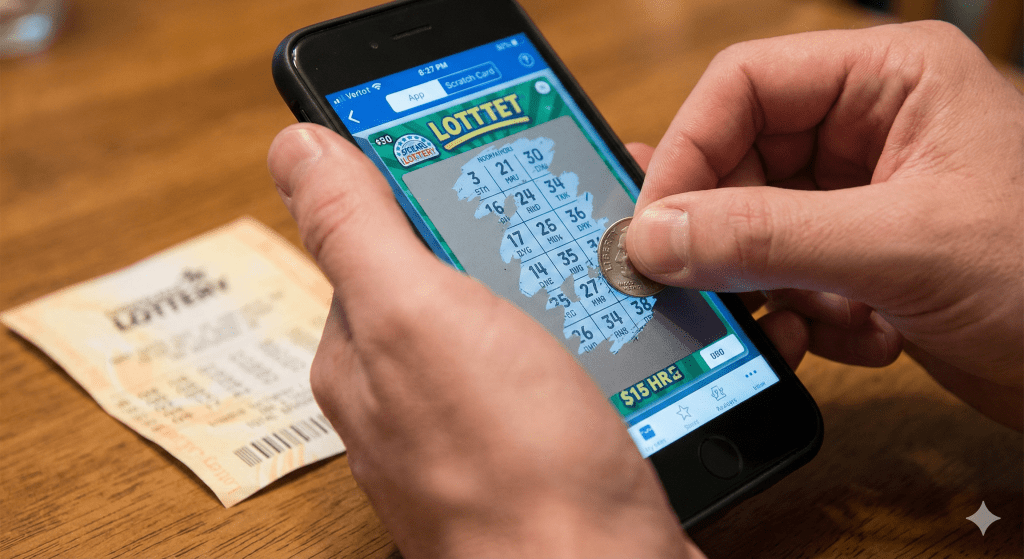
Vermont's Lottery Initiative: A Gamble on Digital Sales
As Vermont lawmakers weigh the implications of House Bill 669, a fundamental question looms: Will the shift to online lottery sales bolster state revenue, or will it create a saturated market and diminishing returns? The answer may hinge on lessons learned from neighboring states.
Michigan’s experience serves as a beacon for proponents of Vermont's initiative. Since launching online lottery sales in 2014, Michigan has witnessed a surge in both digital and retail lottery sales. In fact, online lottery revenue soared to over $2 billion, with retail sales enjoying an annual growth rate of 7.8%. The state's retail commissions have also doubled, painting a picture of a thriving market. Advocates of Vermont's bill point to this success story as a blueprint for potential revenue generation.
However, the experience in Pennsylvania tells a different story. After launching its online lottery in 2018, the state initially saw growth in profits, but by the fiscal year 2024-2025, lottery profits plummeted by over $130 million. Both retail scratch-off sales and online lottery sales dwindled—by 6.2% and 14.8%, respectively. This decline indicates that when economic pressures mount, players may curtail spending across the board, including on lotteries.
Introduced in January 2026, Vermont's proposal aims to authorize the Department of Liquor and Lottery to sell tickets, digital “eInstants,” and lottery subscriptions through mobile apps and websites, with projections of generating an additional $7 million for the state’s Education Fund. Yet, the contrasting experiences of Michigan and Pennsylvania highlight the risks of relying solely on Michigan’s success while neglecting Pennsylvania’s warning signs.
📰 Table of Contents
The Stakes: Revenue and Retailer Protection
New Hampshire's situation provides further context. The state legalized online lottery sales but included protective measures for brick-and-mortar retailers, mandating that 5% of net gaming revenue from online sales be allocated to them. As Vermont considers its proposal, the potential for attracting players from New Hampshire adds a layer of urgency to the issue.
Governor Phil Scott's 2026 State of the State address underscored the need for educational reform and financial relief for Vermont taxpayers. He noted disparities in course offerings between affluent and rural districts, emphasizing the necessity for increased funding. Although the administration's budget for fiscal year 2026 totals $9.0 billion, much of the increase is attributed to inflation and payroll costs rather than new spending capacity. Moreover, the state’s sports betting revenues have lagged, with Commissioner Wendy Knight estimating only $6.1 million for FY2025, falling short of an anticipated $7 million target.
House Bill 669 would grant the Board of Liquor and Lottery the authority to establish rules for online lottery operations, providing flexibility but also leaving key issues—such as retailer compensation—open for future rulemaking rather than embedding them in the law. The legislation mandates that all purchases be initiated and received within the state using geofencing technology and requires age verification for players aged 18 and older, while also protecting player information from public records access.
A major assumption is that online lottery sales will benefit state revenue by eliminating the traditional 5-6% commissions paid to stores. However, the reality is more complex. Savings from eliminating commissions often transfer to technology companies and credit card processors. Digital lottery platforms generally require sophisticated vendors who charge between 15-25% of net gaming revenue, in addition to payment processing fees of 2-4%. This raises concerns that the state’s margin on digital lottery dollars could end up being thinner than on retail sales.
One of the most pressing concerns regarding Vermont's online lottery proposal is the inclusion of “eInstants”—digital scratch-off games that allow users to play in rapid succession. These games are designed to engage players with immediate results, similar to mobile video games, which can blur the lines of responsible gambling. Advocacy groups like Stop Predatory Gambling highlight the changing social contract of state-sponsored gambling, arguing that moving lottery sales from public venues to private homes fundamentally alters its nature. Currently, Vermont’s investment in problem gambling services is below the national average, and the proposal lacks specific funding commitments for these critical services.
As House Bill 669 moves to the House Government Operations Committee, lawmakers will need to grapple with key questions: Will they incorporate statutory language that guarantees retailer compensation? How will they address funding for problem gambling services? And how can they balance the need for increased revenue against the potential for expanded gambling and its associated risks?
If passed, the Board of Liquor and Lottery would select a technology vendor and develop regulations for the online lottery. Vermont's projected $7 million revenue target depends on successfully attracting players without cannibalizing traditional retail sales—a delicate balance that Michigan achieved during a booming economic period, but which Pennsylvania has struggled to maintain in the face of economic uncertainty.
In conclusion, Vermont lawmakers face a crucial decision influenced by two contrasting narratives. Michigan's booming online lottery market stands in stark contrast to Pennsylvania's recent downturn. As they evaluate House Bill 669, lawmakers must weigh the potential for increased revenue against the risks of market saturation, retailer displacement, and the expansion of problem gambling amid a fluctuating economy.
SHOCKING Update: Will Sabonis Play Against the Wizards? You Won't Believe What Experts Are Saying!

Why Small Caps Are Skyrocketing While Tech Giants Face a Shocking Decline – Don’t Miss Out!

Nebraska Shocks College Sports: Why Their New Flag Football Program Could Change Everything!

You Won’t Believe What Climate Change Is Doing to Victoria’s January Blossoms—Find Out Now!

TikTok's Shocking New Age Verification: Are Your Kids Safe? You Won't Believe What Happens Next!
Gap's Bold Move: Why This Entertainment Exec's Appointment Could Change Everything! Under Armour's Shocking C-Suite Shakeup Revealed!
You might also like: