
Shocking Vaccine Panel Picks: Are We Ignoring Dangerous Antidepressant Risks for Pregnant Women?

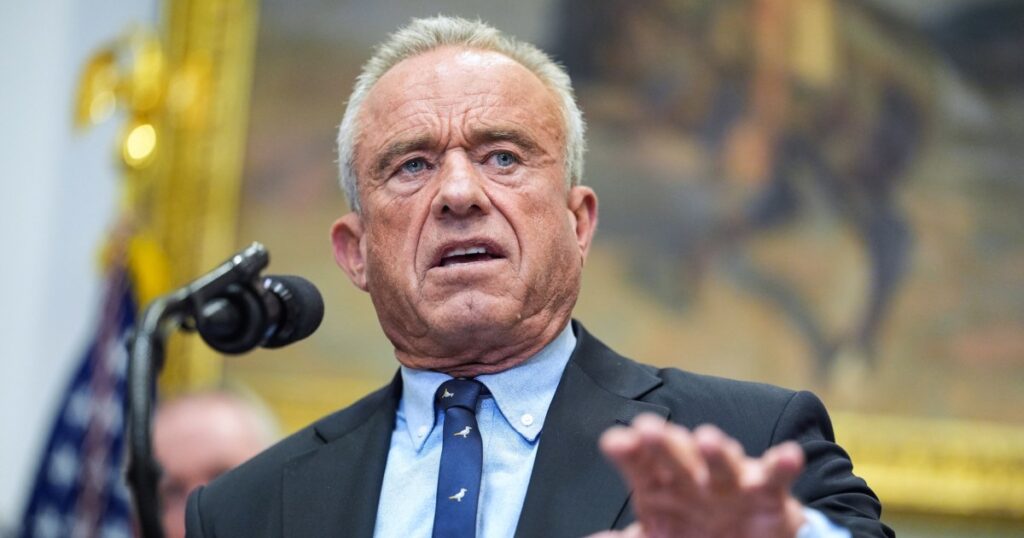
WASHINGTON — In a significant move that has raised eyebrows within the medical community, Health and Human Services Secretary Robert F. Kennedy Jr. has appointed two new members to the Centers for Disease Control and Prevention’s vaccine advisory committee, known as the Advisory Committee on Immunization Practices (ACIP). Both appointees have previously challenged the prevailing medical consensus on vaccines and the use of antidepressants during pregnancy.
On Tuesday, Kennedy announced the addition of Dr. Adam Urato and Dr. Kimberly Biss, obstetrician-gynecologists from Boston and St. Petersburg, Florida, respectively. This change comes after Kennedy dismissed the previous panel of experts in June, claiming it was “plagued with persistent conflicts of interest.”
Dr. Biss has notably been a vocal skeptic of Covid vaccines. In 2023, she testified before a GOP-led House subcommittee on Covid vaccines, asserting that some of her patients experienced severe menstrual irregularities following vaccination, leading her to perform surgeries and hysterectomies. She also claimed that the miscarriage rate in her practice increased each year from 2020 to 2022, suggesting a potential link to the vaccines, and implied that some vaccinated women entered early menopause.
Her statements drew sharp criticism from pediatrician and former ACIP member Paul Offit, who denounced her claims in a post on Substack. Offit described Biss’s remarks as alarming, particularly her assertion that only 3 in 1 million children die from Covid—a figure he challenged, clarifying that the actual death rate was closer to 10 in 1 million. He emphasized that Covid shots are effective in reducing the severity of illness and lowering hospitalization rates.
Biss has also raised questions about vaccine safety in general. During a panel discussion on PBS’s Kentucky Educational Television last October, she argued against the outright dismissal of alternative medical ideas, including concerns about vaccine safety and the advice that pregnant women avoid taking Tylenol due to potential links to autism. Although the bulk of scientific evidence suggests that moderate Tylenol use is safe during pregnancy, Biss advocated for more questioning of established medical guidance.
Dr. Urato, who specializes in maternal-fetal medicine, has also expressed concerns about the safety of vaccines given during pregnancy—specifically for flu, RSV, and Covid—as well as the use of antidepressants among pregnant women. He has petitioned the Food and Drug Administration to add warnings to a class of antidepressants known as serotonin reuptake inhibitors (SSRIs), claiming they could lead to pregnancy complications and alter fetal brain development.
While some studies suggest a slightly elevated risk of miscarriage associated with SSRIs, robust scientific research has not confirmed a definitive link between antidepressant use in pregnancy and conditions like autism or birth defects. In July, Urato participated in an FDA discussion where the majority of panelists questioned the established safety of SSRIs during pregnancy, asserting, “Never before in human history have we chemically altered developing babies like this.”
Despite the controversy surrounding their views, Kennedy has defended the appointments, asserting that Urato and Biss possess the “scientific credentials, clinical experience, and integrity” that ACIP requires. Following the recent appointments, ACIP has recommended Covid vaccinations only for individuals aged 65 and older and those with underlying health conditions, a significant shift from previous guidelines advocating for vaccinations for all individuals aged six months and older. This decision diverged from evidence indicating that Covid shots protect healthy children and younger adults from severe illness.
The panel's discussions have ventured into fringe theories that lack substantial scientific backing, including claims about vaccine-induced injuries and long-term health risks. Although studies have consistently demonstrated the safety of Covid vaccines—highlighting that while there is a small risk of myocarditis, the risk is significantly greater following a Covid infection—the committee's recommendations and the recent overhaul of vaccination guidelines have stirred debate.
In December, ACIP reversed a decades-long recommendation for infants to receive the hepatitis B vaccine shortly after birth, suggesting instead that mothers who test negative for the virus consult with doctors about administering the first dose. Furthermore, Kennedy unilaterally altered the childhood immunization schedule last week, reducing the number of targeted diseases from 18 to 11, and advising parents to consult their healthcare providers regarding vaccinations for flu and Covid, a decision met with opposition from the American Academy of Pediatrics.
As the appointments of Biss and Urato to ACIP signal a distinctive shift in the CDC's approach to vaccine recommendations, their influence and the ongoing discourse around vaccine safety will likely play a crucial role in shaping public health policy in the coming months. The implications for healthcare providers, expectant mothers, and parents navigating the vaccination landscape remain to be seen as these new perspectives take root within the agency.
CrowdStrike Just Paid $400M for a Startup—Here’s Why You Should Be Terrified!

Trump's SHOCKING Detroit Speech: Will It CRUSH the Economy? Plus, Supreme Court's Controversial Decision on Trans Athletes!

17-Year-Old's Shocking Arrest: Social Media Threats and Arson Spark Community Panic! What’s Next?

AYANEO's Shocking Delay: What You MUST Know Before the 'Pocket PLAY' Hits Stores!
Unlock Your Hidden Potential: Why 90% Fail to Stay Active—Discover the Secrets at CMC Physical Therapy!

Is Social Media Polluting Your Mind? Discover the Shocking Truth Behind Cleaner Air!
You might also like: