
Gov't's Shocking STO Exchange Rules: Will Startups Be Left in the Dust? Find Out Now!

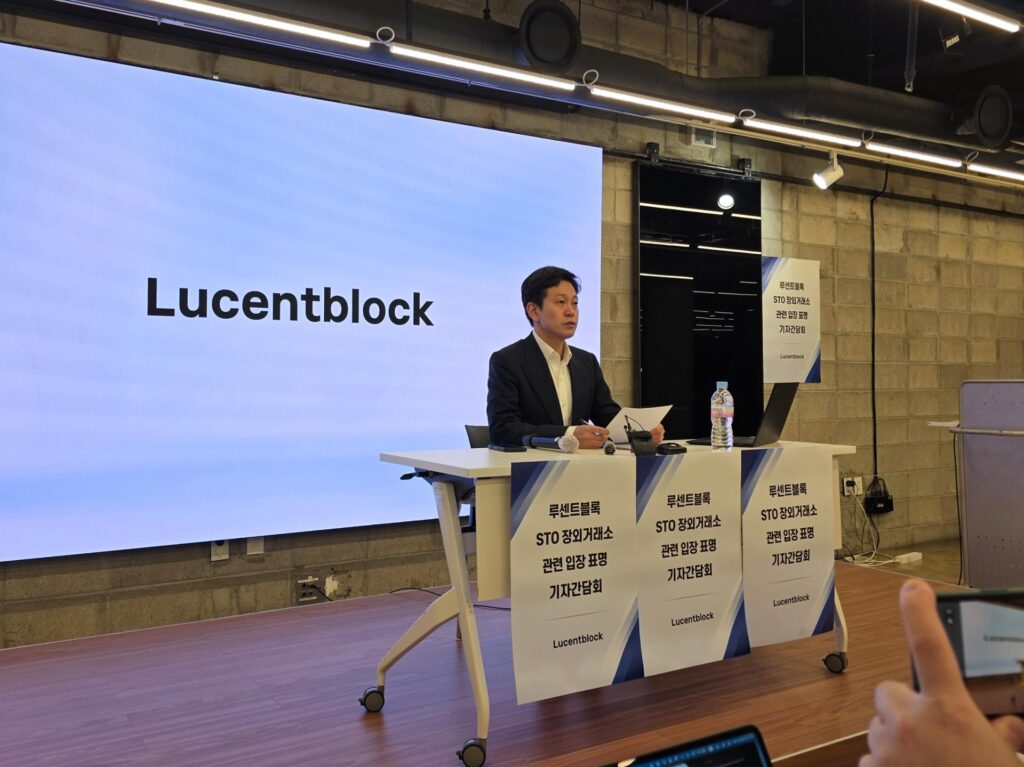
In a significant development for South Korea's financial technology sector, the Financial Services Commission (FSC) is under scrutiny for its preliminary approval process concerning operators of over-the-counter trading platforms for security tokens. Lucentblock, a startup that has pioneered a real estate fractional investment platform, has expressed strong objections after being placed at risk of exclusion from this emerging market, raising alarms about potential impacts on innovation and competition within the industry.
Lucentblock has claimed that it has been “driven to the edge of shutdown by entrenched interests.” Critics warn that sidelining such startups—companies that have cultivated expertise under government-supported nurturing policies—would contradict the administration of President Lee Jae-myung, which has publicly committed to fostering innovative sectors. As the debate intensifies, the implications for the broader fintech landscape in South Korea become increasingly evident.
The National Assembly is currently considering bipartisan-backed legislation on security token offerings (STOs), expected to formally launch this year. STOs allow for fractional investments in real-world assets—such as real estate and art—integrating this functionality into the formal financial system through blockchain infrastructure. The FSC has shortlisted two consortia for preliminary approval: the KDX consortium, led by the Korea Exchange, and the NXT consortium, spearheaded by alternative trading platform Nextrade.
Scheduled for a decisive meeting to finalize its decision, the FSC faces substantial backlash. If the outcome remains unchanged, Lucentblock may be excluded from the market, jeopardizing its future. Established in 2018 as part of the FSC’s regulatory sandbox program, Lucentblock has successfully built a user base of around 500,000 and facilitated the issuance and distribution of assets totaling 30 billion won (approximately $20 million).
CEO and co-founder Huh Se-young has publicly questioned the fairness of the approval process and raised concerns regarding potential technology misappropriation. “I felt abandoned after serving as a government test case," Huh stated during a press briefing. "Excluding Lucentblock runs counter to the original intent of the regulatory sandbox, which was designed to foster and protect innovative startups.” He emphasized that it is troubling for a company that has operated as a model for four years to be denied the opportunity to continue its operations.
Lucentblock has filed a formal complaint alleging unfair trade practices and possible violations of the Monopoly Regulation and Fair Trade Act. The startup claims that neither the KRX consortium nor the NXT consortium underwent a merger review, despite meeting the legal thresholds for such scrutiny. Under South Korean fair trade law, a merger review is mandated if one party possesses total assets or sales of 2 trillion won or more, while another exceeds 300 billion won.
Moreover, Huh has accused Nextrade of approaching Lucentblock under false pretenses—initial discussions about potential investment or consortium participation led to the sharing of sensitive internal information. Huh claims the materials shared included financial statements, a shareholder registry, and business plans, which Nextrade allegedly used when filing its own license application in the same business area. The NXT consortium has denied these allegations, asserting that none of the documents received contained confidential information and that there was no misappropriation of technology or business ideas during the licensing process.
The situation has raised broader concerns about the potential marginalization of startups that have contributed to building the STO ecosystem under government authorization. Critics argue that such moves contradict President Lee's calls to create a 40 trillion won venture investment market and to expand support for innovative companies. Lawmaker Kwon Chil-seung, a member of the ruling Democratic Party of Korea and former minister of SMEs and startups, voiced his concerns on social media. “Lucentblock was the first company in Korea to test and validate a real estate fractional investment platform,” he noted. “Excluding startups that led the market while bearing early-stage risks could severely damage confidence in the FSC’s innovation agenda.”
As the financial regulatory landscape evolves, the ongoing debate illustrates the tension between established financial institutions and groundbreaking startups. The outcome of the FSC's approval process could set a significant precedent for how innovation is treated in South Korea—a critical issue as the nation aims to position itself as a leader in fintech and digital finance solutions.
10 Jaw-Dropping New Wellness Spots in Cy-Fair: You Won't Believe #3!

Steelers Suffer SHOCKING Wild-Card Loss to Texans: Did This 1 Decision Change Everything?

Is Mike Tomlin's NFL Legacy in Jeopardy? Shocking 6th Consecutive Playoff Loss Raises Eyebrows!
DeSantis Declares Broward Schools a “Nightmare” – Will State Seize Control? Find Out Why!

Ja Morant's Shocking Grizzlies Exit: The $39 Million Mistake Nobody Saw Coming!

Tennessee's Shocking Immigration Plan: What Happens If You Don't Know This?
You might also like: