
iPhone Takes Down Samsung: What Shocking Move Did Apple Make to Snatch the #1 Spot?

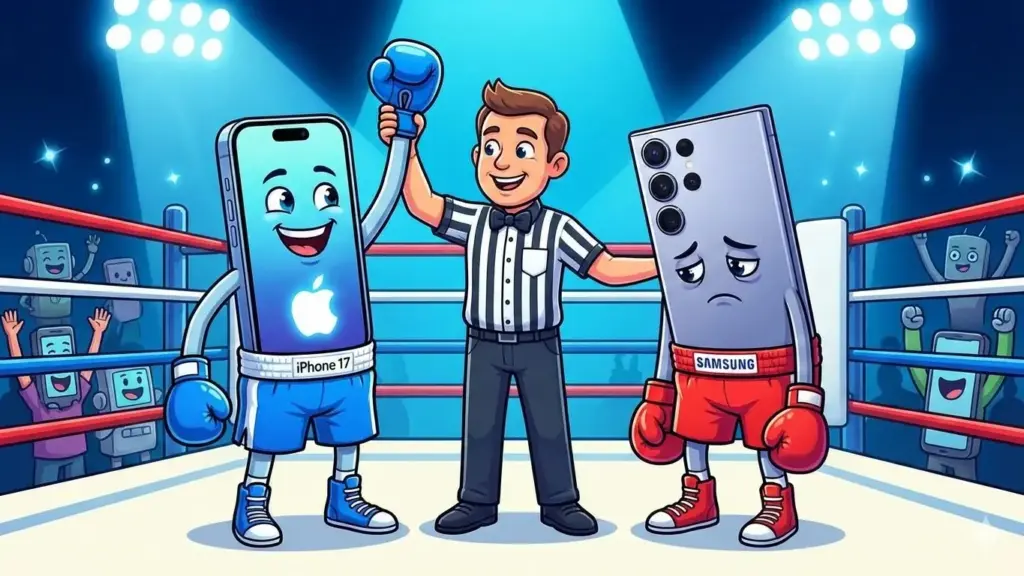
In a significant shift within the global smartphone market, the iPhone has claimed the top position in 2025, surpassing its key competitor, Samsung. According to data from Counterpoint Research, Apple secured a commanding 20% share of worldwide smartphone sales, with its shipments experiencing a notable 10% increase year over year, largely fueled by robust demand for the new iPhone 17 series.
This rivalry between Apple and Samsung represents a clash of contrasting philosophies. Apple has carved a niche for itself by focusing on a tightly integrated ecosystem of hardware and software, offering a small, meticulously curated lineup of devices. Samsung, on the other hand, employs a more diverse strategy, boasting a wide range of models and price points while relying on Google to develop the Android operating system. Currently, Apple's approach appears to be resonating more effectively with consumers.
Varun Mishra, a senior analyst at Counterpoint, remarked, “Apple’s growth in 2025 was driven by its expanding presence and rising demand across emerging and mid-size markets, supported by a stronger product mix.” Notably, the iPhone 17 series gained significant traction in the fourth quarter following its successful launch, while the iPhone 16 continued to perform exceptionally well in key markets such as Japan, India, and Southeast Asia.
The global smartphone landscape is also witnessing a broader trend toward premium devices. Mishra's colleague, analyst Shilpi Jain, noted, “In 2025, the smartphone market continued its gradual shift toward higher price tiers, driven by consumers upgrading to premium devices.” This trend aligns perfectly with Apple's strategy, as the company primarily manufactures premium handsets.
Despite Apple's impressive growth, Samsung remains a formidable competitor, holding a close second place with a 19% share of the global market in 2025. Its shipments increased by 5% year over year, with much of this growth attributed to the more affordable Galaxy A series, rather than its flagship models. Interestingly, in both 2023 and 2024, these two tech giants were essentially tied for the top spot, each capturing 18% of the market at one point and prompting intense competition.
Historically, Samsung has been the best-selling smartphone maker for over a decade, dating back to around 2012 or 2013, depending on the data source. Its ability to innovate quickly and offer a wide variety of devices puts it in a strong position, even in the face of Apple's recent surge in popularity.
Chinese brands rounded out the top five smartphone manufacturers in 2025, with Xiaomi retaining the third spot, securing a 13% market share. Both Vivo and Oppo tied at 8%. Interestingly, despite the brand recognition of the Google Pixel line, it has struggled to gain sufficient sales volume to break into the top five globally.
As the competition intensifies, the dynamics between Apple and Samsung will likely shift, reflecting broader trends in consumer preferences and technological advancements. For American readers, this evolving landscape underscores not just the rivalry between these tech behemoths, but also the increasing demand for premium devices in a world where smartphone functionality continues to deepen and expand.
OpenAI's Surprising Move: How Acquiring Torch Could Transform ChatGPT's Health Features—Find Out Why!
Florida’s Lt. Gov. Jay Collins Enters 2026 Race: Is This the End for Trump’s Favorite?

Shocking NFL Shakeup: Why Matt LaFleur's Extension Could Change Everything for the Packers!

Unlock the Secret to a Healthier Life: 10 Pantry Staples That Could Change Everything!

You Won't Believe How This Atlanta Startup Transforms Food Waste into 400x Better Soil!

SERHANT’s Shocking CTO Move Sparks Controversy—What Florida Realtors Are Hiding!
You might also like: