
You Won’t Believe How Real-Time Monitoring is Shocking Insomniacs: 3 Startling Results Revealed!

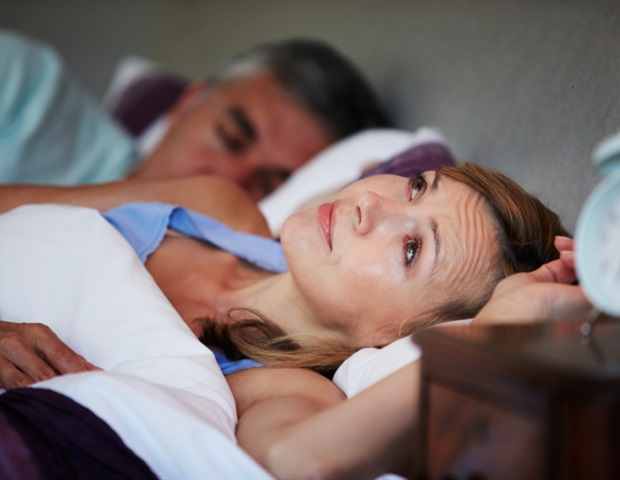
Chronic insomnia affects approximately one in nine adults in the United States, leading to a range of debilitating symptoms such as drowsiness, cognitive impairments, and irritability. Furthermore, untreated insomnia can increase the risk of serious health issues like diabetes and heart disease. While various treatments exist, assessing their effectiveness on an individual basis presents a significant challenge.
Recent research from the University of Maryland School of Medicine introduces a promising approach: real-time, smartphone-based assessments to evaluate the efficacy of sleep medications. This study highlights the potential of technology in improving our understanding of sleep disorders by detecting subtle changes in daytime symptoms, including cognitive function, fatigue, and mood. The findings were published in JAMA Network Open.
The clinical trial involved 40 older adults, aged 60 to 85, suffering from chronic insomnia. Participants were randomly assigned to receive either the sleep medication suvorexant or a placebo for 16 nights. Throughout the study, both groups utilized a smartphone app to log their daytime insomnia symptoms in real-time, recording their experiences four times daily. In addition, they completed traditional questionnaires assessing their sleep patterns and daytime symptoms both before and after the treatment period.
Key Findings
- Traditional questionnaires noted a general improvement in insomnia severity between the treatment and placebo groups but failed to observe significant differences in daytime symptoms.
- The smartphone-based assessment approach, known as ecological momentary assessment (EMA), unveiled notable distinctions: those taking suvorexant reported increased morning fatigue yet decreased fatigue later in the day. Early cognitive alertness also dipped in the suvorexant group, normalizing as the day progressed.
- Participants in the suvorexant group indicated numerically worse moods at all four times of day compared to those receiving a placebo, although these differences did not reach statistical significance.
- The smartphone assessment proved user-friendly, with a high completion rate of 93.3%, indicating strong engagement and feasibility.
Dr. Emerson M. Wickwire, the study's corresponding author and a faculty member at the University of Maryland School of Medicine, emphasized the importance of addressing daytime symptoms associated with insomnia. "Improving sleep is not enough. We need to determine how well treatments improve daytime functioning, which patients report matters most. In this study, we found that retrospective questionnaires failed to detect subtle treatment-related changes that were detected via the smartphone assessment."
This study marks the first randomized controlled trial to utilize smartphone-based EMA as an outcome measure specifically for sleep disorders. By providing real-time insights into treatment effects throughout the day, researchers argue that EMA could revolutionize how treatments for sleep disorders, including obstructive sleep apnea and excessive sleepiness, are evaluated.
Dr. Wickwire noted, "These findings address a critical gap in sleep disorders clinical care and research. When viewed as a complement to traditional approaches, EMA offers a sensitive and patient-centered way to measure treatment effects throughout the day, in real-time. Such approaches could transform how we evaluate sleep treatments, personalize sleep medicine care, and ultimately improve outcomes for the millions of Americans with sleep disorders."
Co-authors of the study include Dr. Shuo Chen, Professor of Epidemiology & Public Health at UMSOM; Dr. Avelino Verceles, Professor of Medicine at UMSOM; and University of Maryland graduate student Jingsong Zhou. The study was funded in part by a research grant from the Investigator-Initiated Studies Program of Merck Sharp & Dohme LLC, a subsidiary of Merck & Co, Inc.
Dr. Mark T. Gladwin, Dean of the University of Maryland School of Medicine, highlighted the transformative potential of digital tools in comparative effectiveness studies. "Smartphone-based assessments can provide real-time insights that help improve patient outcomes across a range of common conditions," he stated.
As the prevalence of sleep disorders continues to rise, the integration of technology such as smartphone-based assessments into clinical practice may offer a new pathway for personalized care. With millions of Americans affected by sleep disorders, advancements in how we assess and treat insomnia could not be more timely.
You Won't Believe What Shocking Secrets Were Revealed at This Year's Expo Season! 10 Must-See Highlights!

Why a Singapore Startup Founder Says AI Could Save the Music Industry—And How You Might Benefit!

You Won't Believe Which 3 Pilots Just Made the U.S. Men's National Team—The Shocking Details Inside!

Will Herb Jones & Trey Murphy Risk Everything? Shocking Injury Update Could Change Everything!
Are You Prepared? Experts Warn This Flu Season Could Hit 1 in 5 Coloradans—Telehealth is Your Lifeline!

Kawhi Leonard's Shocking Injury Update: Will LA's Season Crumble Without Him?
You might also like: