
You Won't Believe How India's Water Crisis Is Fueled by Shocking Government Failures! Find Out Why 600 Million Are at Risk!

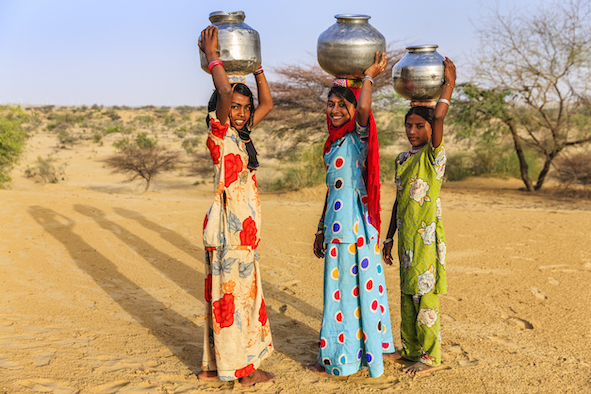
The recent tragedy in Indore, India, serves as a stark reminder of the profound failures within everyday systems that are meant to protect public health and safety. This situation echoes Albert Camus' poignant novel, The Plague, which illustrates how bureaucratic complacency and delayed responses to crises can lead to catastrophic consequences. In the case of Indore, the deaths were not due to natural disasters like drought or force majeure, but rather the result of a long-standing neglect of basic infrastructure. Residents’ complaints about their water supply had been ignored for months, with pipelines running perilously close to sewage sources, highlighting a governance failure that has become all too familiar in India’s ongoing water crisis.
India is teetering on the brink of a colossal water crisis that threatens not just its economy, but also its health, ecology, and social fabric. The country ranks a staggering 133rd out of 180 nations in terms of per capita water availability and near the bottom (120th out of 122) for water quality. This alarming situation underscores the depth of India's water governance crisis. The Centre’s Smart Cities Mission, launched in 2015 with the ambitious goal of developing 100 sustainable and inclusive cities, revealed that 80% of India’s surface water is polluted, leading to an annual loss of approximately US$6 billion due to water-related diseases.
Challenges within the Indian water sector are numerous and include increasing water consumption, wastage in urban areas, and the growing prevalence of water-borne diseases. Experts estimate that addressing these challenges will require an investment of around US$13 billion. Alarmingly, projections suggest that by 2030, India may be unable to meet half of its water demand unless there are significant shifts in policy and management. This crisis is not a sudden occurrence but the culmination of decades of poorly conceived policies, demographic pressures, and the escalating impacts of climate change.
In recent years, authors like Mridula Ramesh, with her book Watershed: The Story of India’s Water in the Age of Climate Change, and Harini Nagendra and Seema Mundoli, with Shades of Blue: Connecting the Drops in India’s Cities, have shed light on India's water issues, placing them within historical and ecological context. Once, India’s hydrological narrative was characterized by community-based resource management, with traditional water harvesting methods such as tanks and stepwells designed to adapt to seasonal changes. However, colonial policies and post-Independence development models transitioned water from a communal resource to a commodified one, governed by central bureaucracies.
Ramesh’s work details how this historical shift has led to a system rife with inequality and depletion. As urbanization accelerates, cities are becoming ecological pressure cookers. The authors of Shades of Blue illustrate how urban planning often treats water merely as an engineering challenge rather than recognizing it as an integral part of community life and ecological systems. Pollution from untreated sewage and industrial effluents has rendered vital water bodies toxic, eroding both environmental health and public trust.
Furthermore, the urban-rural divide exacerbates inequality in access to water. Wealthy areas benefit from private borewells and subsidized supplies, while poorer urban neighborhoods frequently struggle with intermittent and unsafe water sources. This inequity is not just a logistical failure; it reflects deeper socio-political fractures in how water is valued and distributed. Urban water scarcity, therefore, is not merely a matter of inadequate supply but of fractured social and ecological connections.
Climate change acts as an accelerant to this crisis. With more erratic monsoon patterns, wetter years are bringing floods while drier years are intensifying droughts. Scientific analyses affirm that extreme weather events are on the rise, reshaping traditional expectations of water availability and usage. Ramesh emphasizes that parts of India have already begun to run out of water, with the dual challenges of drought and flooding becoming a grim reality.
The governance of water in India is at the heart of its crisis. Historical patterns have centralized water management, often sidelining local communities. Reforms aimed at enhancing efficiency can end up reinforcing state control, further entrenching inequities in access and management. Although India’s constitution allocates water responsibilities across various levels—irrigation, urban supply, agriculture, and interstate rivers—effective coordination remains elusive.
The 2016 Mihir Shah committee report, A 21st Century Institutional Architecture for India’s Water Reforms, called the crisis fundamentally a governance failure rather than a mere scarcity issue. It recommended the creation of a National Water Commission (NWC) to integrate fragmented management systems and shift focus from dam-building to demand management and sustainable practices. Despite some initiatives, such as the establishment of the Ministry of Jal Shakti in 2019 and large-scale missions addressing water access and conservation, the core institutional reforms remain largely unimplemented.
To avert further catastrophe, India must adopt a holistic approach to water governance—one that respects historical knowledge, empowers communities, and aligns with sustainable practices. The urgency is clear: to transform an impending water scarcity into an opportunity for ecological balance and social justice.
You Won't Believe How This Local Hero is Defying Wolves with AI—And It Could Save Farms!
You Won't Believe What This Company Did to Snacks—Their Secret Ingredient Will Shock You!

Trump's Shocking Move: US Exits UN Climate Treaty – What This Means for YOU!

Is Your Brand Doomed? 7 Surprising Social Media Strategies for 2026 You Can’t Afford to Ignore!

Shocking Allegations: What the Chiefs Reveal About Rashee Rice’s Disturbing Past Will Leave You Speechless!

Trump's Secret Move: What Happens Now That He’s Abandoned the Climate Treaty? Shocking Consequences Await!
You might also like: