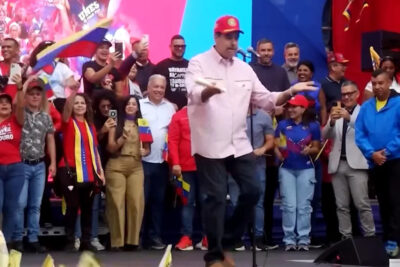
White House's Shocking Ultimatum: Will Venezuela's Leader Face a Deadly Blueprint? What’s Next for Cuba and Greenland?

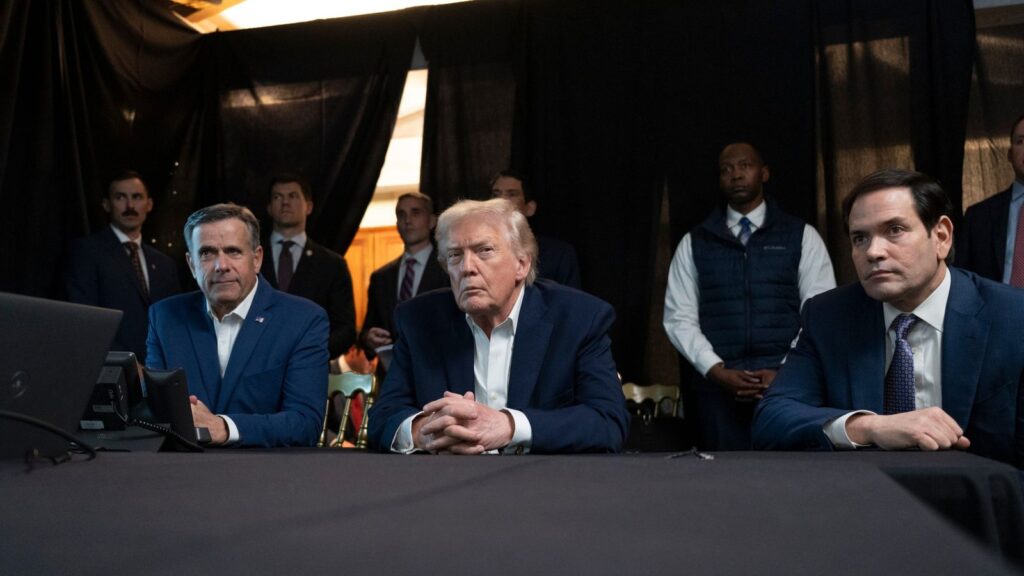
In a stunning escalation of geopolitical tensions, the Trump administration launched a military operation in Venezuela on January 2, 2026, resulting in the controversial kidnapping of President Nicolás Maduro. The day after the operation, President Donald Trump made a series of aggressive remarks, threatening not only Venezuelan officials but also signaling potential military action against other nations across Latin America and beyond.
During a press conference, Trump specifically targeted Venezuelan Vice President Delcy Rodríguez, newly sworn in as acting president after Maduro's abduction. Trump warned Rodríguez that she would face consequences "worse" than Maduro's fate if she did not comply with U.S. demands, stating, "If she doesn’t do what’s right, she is going to pay a very big price. Probably bigger than Maduro." These comments came hours after Rodríguez denounced the U.S. operation, labeling it "a barbarity" and reaffirming Maduro as Venezuela's only legitimate leader.
In a separate appearance on NBC’s “Meet the Press,” Secretary of State Marco Rubio suggested that Cuba may be next on the U.S. military agenda, describing the Cuban government as "a huge problem." When pressed on the possibility of military operations targeting Cuba, Rubio hinted at significant challenges for the island nation, indicating a broad scope of U.S. military engagement in the region.
Trump also raised eyebrows with renewed aspirations to annex Greenland, referring to it as a strategic territory essential for U.S. defense against perceived threats from Russia and China. "We do need Greenland, absolutely. We need it for defense," Trump told The Atlantic, adding that military actions in Venezuela could indicate a willingness to use force in this regard. Danish Prime Minister Mette Frederiksen quickly dismissed Trump's claims, emphasizing that the U.S. has "no right to annex" Danish territory.
As the Trump administration continues to assert its dominance, Rubio clarified on CBS's "Face the Nation" that the U.S. is not interested in facilitating democratic elections in Venezuela. Instead, he revealed that the primary aim is to gain control over Venezuela's vast oil resources, which hold the largest proven reserves in the world. He stated, “the number one thing we care about is the safety, security, well-being and prosperity of the United States,” a stark reminder that U.S. foreign policy often prioritizes national interests over democratic ideals.
The U.S. military operation has resulted in tragic casualties, with reports indicating that 80 Venezuelans, both soldiers and civilians, have died. Furthermore, American forces destroyed multiple buildings at Venezuela's largest military base and initiated a naval blockade, limiting the country's capacity to export oil and straining its economy. Rubio referred to the blockade euphemistically as a "quarantine," claiming it would remain until Venezuela opens its nationalized oil industry to American corporations under terms dictated by Washington.
Analysts point out that the military engagement in Venezuela is a part of a broader U.S. strategy to undermine both China and Russia's influence in the Western Hemisphere. Currently, China imports approximately 80% of Venezuelan oil exports, and the U.S. aims to deprive its rivals of this crucial energy resource. Rubio articulated this goal, questioning why China and Russia should benefit from Venezuelan oil, insisting that the U.S. cannot allow these countries to use the Western Hemisphere as a base for operations against American interests.
While the U.S. government continues to frame its actions as necessary for national security, the legality of these military operations remains highly contentious. The attack violates Article 2(4) of the UN Charter, which prohibits the use of force against the territorial integrity of any state. The naval blockade also constitutes an act of aggression under UN General Assembly Resolution 3314, and the seizure of Venezuela’s oil resources could be considered pillage under international law.
The Democratic Party has largely failed to oppose these aggressive actions, with Congressional leaders like Senate Minority Leader Chuck Schumer labeling Maduro an "illegitimate dictator" while only critiquing the lack of a credible plan following the military operation. House Minority Leader Hakeem Jeffries echoed this sentiment, emphasizing that Maduro was "not the legitimate head of government" but stopping short of condemning the military assault directly.
The implications of this situation extend beyond Venezuela, raising critical questions about U.S. foreign policy and its commitment to international law. As tensions escalate, the potential for conflict affecting not just Latin America but global relations looms large. The American public must grapple with the ramifications of such military engagements, understanding that the working class can no longer rely on the ruling factions to oppose imperialist aggression. Opposition must arise from grassroots movements both at home and abroad, as the stakes grow ever higher in this volatile geopolitical landscape.
Maduro's Shocking Dance Moves Infuriate the White House—Now He's Facing 20 Years Behind Bars!

You Won't Believe Which 6 NFL Teams Are Poised for an Epic Wild-Card Upset This Weekend!

2025's Holiday Animals: 5 Shocking Ways Climate Change Will Transform Your Favorite Species!

ETBU's Shocking 20-Point Comeback: How They Stunned California in the Final Moments!
Yodchanan Drops a BOMBSHELL: Why No Party Will Ever Form a Government After This Election!
Guinea's Coup Leader Becomes President-Elect: What This Shocking Vote Means for You!
You might also like: