
Trump's Health Crisis: What the White House Isn't Telling You Could Change Everything!

As President Donald Trump approaches his 80th birthday in June, speculation about his health has become a focal point among political observers and opponents. This week, Trump surprised many by directly responding to a query from the Wall Street Journal regarding concerns about his well-being. His willingness to address these rumors underscores the sensitivity of the issue for the country's oldest commander in chief, particularly as he attempts to project an image of vitality rather than that of a "lame-duck" leader.
Trump’s health came under scrutiny following a New York Times article last November that suggested he exhibited "signs of fatigue" while grappling with the realities of aging in office. In response, Trump took to social media to dismiss the report, calling the article's author, Katie Rogers, a "third-rate reporter" and making derogatory comments about her character.
Republican strategist Doug Heye noted that Trump is acutely aware of how health perceptions can impact political fortunes, especially given how age has played a role in the public’s view of President Joe Biden. "It's a story you can never get fully in front of," Heye remarked, emphasizing that both leaders are subject to scrutiny at their advanced ages. He added that any public slip by either could be repeatedly analyzed by voters.
Democratic strategist Garry South has not held back in critiquing Trump’s health, suggesting that visual evidence—like instances of the president appearing to doze off during meetings and having visibly swollen ankles—supports the narrative that Trump is "a sick old man." However, it is essential to note that while images of Trump with closed eyes have circulated, there is no definitive proof that he was asleep during meetings. In a recent interview, Trump himself described closing his eyes as "very relaxing."
In a call with the Wall Street Journal, Trump clarified details about his medical evaluations, correcting a previous statement about undergoing an MRI at Walter Reed National Military Medical Center. Instead, he had a cardiovascular and abdominal CT scan, which he later stated was unnecessary but provided his critics with "ammunition." "Nothing's wrong," Trump insisted, reiterating that he takes more aspirin than his doctor recommends because he believes it helps with blood thinning.
White House press secretary Karoline Leavitt has emphasized Trump’s openness about his health, contrasting it with Biden's past lack of transparency. She noted that Trump’s willingness to discuss his medical imaging stands in stark relief to Biden’s tendency to downplay health issues. In the past, Biden faced scrutiny for being less forthcoming about his physical and mental condition during his 2016 campaign.
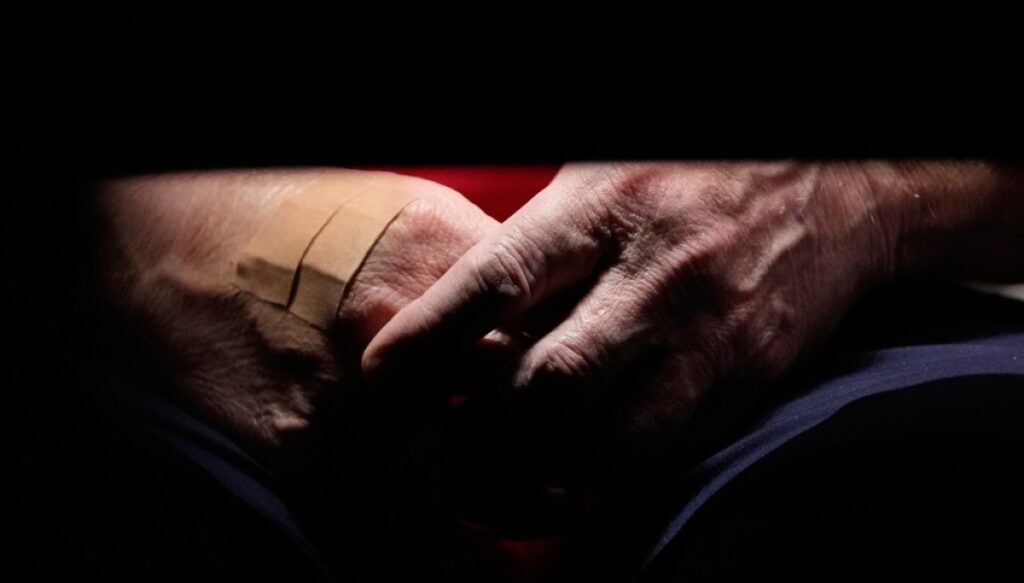
Despite the president’s ongoing insistence on his transparency, there remain concerns about his health. This was further amplified by reports of Trump's bruised hands and a diagnosis of chronic venous insufficiency, which contributes to his swollen ankles. His doctor, Navy Captain Sean Barbabella, mentioned that the additional imaging conducted during Trump's physical was "perfectly normal" and revealed no abnormalities.
Trump's public schedule has noticeably lightened during his second term, raising questions about his stamina. Republican strategist John Feehery argues that these health concerns are largely media-driven distractions, stating that Trump has not shown a lack of energy or "moxie" to fulfill his duties. "This health thing is a media-created fixation," Feehery asserted, emphasizing the need to focus on Trump’s policy achievements instead.
While some political analysts, like Craig Shirley, maintain that health concerns will not significantly impact the upcoming 2026 midterms, others, such as Democratic strategist Christopher Hahn, assert that Trump's fitness for the presidency is a legitimate issue. "It’s absurd to think he’s as fit as the job requires," Hahn noted, adding that health will only become a pressing matter if it affects Trump’s ability to perform his duties.
Trump has taken steps to counteract the health narrative, including sharing the results of a cognitive test that he asserts show he is in "PERFECT HEALTH." He has also suggested that all presidential candidates should undergo stringent cognitive evaluations, emphasizing his belief that "our great country cannot be run by 'STUPID' or INCOMPETENT PEOPLE!"
As speculation continues to swirl around Trump’s health, the implications for both his political future and the broader political landscape remain to be seen. With age and health increasingly becoming a topic of discussion, the question of how this will shape American politics in the lead-up to the midterms looms large.
Is Your Child’s Holiday Sugar Fix Harming Their Health? Shocking Truths Revealed!

Is the White House Secretly Hiding 7 Titles That Could Change Everything? You Won't Believe What They Are!
“This Revolutionary Vaccine Could Change Everything for Triple-Negative Breast Cancer—Find Out How!”
North College Hill High's Shocking Decision: Tyler Williams Takes the Helm—What’s at Stake?
You Won't Believe What This Celebrity Did—Legal Issues Could Change Everything!

Cadillac's Mysterious Post Has Fans Speculating: Will They Unveil a Game-Changer or Leave Us in the Dark?
You might also like: