
Markopolo AI’s Shocking Strategy to Cut Cart Abandonment by 75%—Are You Missing This Secret?

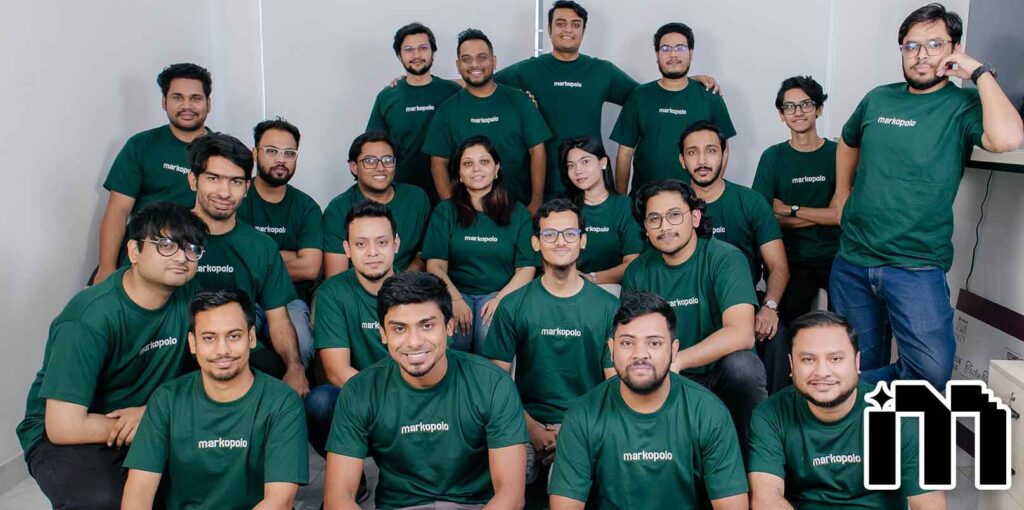
In the fiercely competitive realm of e-commerce, the journey from attracting consumers to closing sales often falters at the checkout stage. Enter Markopolo AI, a startup founded by marketing technology innovator Tasfia Tasbin. The company is revolutionizing how brands recover lost sales by merging behavioral intelligence with automated multi-channel engagement strategies.
In an exclusive interview, Tasbin shared insights into Markopolo's evolution, its strategic localization for the South Korean market, and how the company is reshaping e-commerce efficiency as it progresses through the K-Startup Grand Challenge (KSGC) 2025.
📰 Table of Contents
Transforming E-Commerce Checkout
Q: What motivated you to start this company, and what core problem were you trying to solve?
Tasbin explained that Markopolo AI was born from observing a frustrating trend across various brands: while companies pour significant resources into driving traffic to their checkout pages, approximately 70–75% of potential customers abandon their carts. Traditional solutions, such as generic email reminders, were failing to engage these customers effectively.
“We realized the real issue wasn’t about sending more reminders; it was about understanding why someone abandoned their cart in the first place,” Tasbin remarked. “We built a system that tracks hundreds of behavioral signals to comprehend customer intent, then uses AI to start meaningful conversations through email, SMS, WhatsApp, or even voice calls.”
Wheeling into the Korean E-Commerce Market
Q: What opportunity did you identify in the Korean market, and what signals indicated that your solution could succeed?
With a staggering USD 84 billion e-commerce market, South Korea also faces cart abandonment rates that are significantly higher than the global average, hitting around 74.5%. This discrepancy presented a clear gap that caught Markopolo's attention during the KSGC. Through discussions with local agencies and merchants, it became evident that while Korea's e-commerce operations are data-driven and ROI-focused, many merchants still rely on outdated email automation tools.
“We noticed that Korean merchants generally depend on agency partners to vet and introduce new tools rather than purchasing directly, as is common in the U.S.,” Tasbin elaborated. “Since Markopolo consistently demonstrates measurable results within weeks, our model aligns perfectly with the local ecosystem.”
Another advantage is the high mobile commerce penetration in Korea—over 70%, one of the highest globally—making it an ideal market for Markopolo’s multi-channel engagement system, particularly through SMS and WhatsApp, where response rates are robust.
Q: What role did mentors or partnerships play during KSGC in shaping your strategy?
Tasbin noted that KSGC provided invaluable hands-on support beyond simple market insights. “The team helped us connect with legal resources for company registration and facilitated networking sessions that led to promising partnership opportunities,” she stated.
However, the most pivotal insight came from market expert sessions that led to a significant pivot in their strategy. Initially, Markopolo planned to replicate its typical model of direct merchant sign-ups. “Our mentors quickly made us realize that cold outreach doesn’t work here. Relationships matter, and merchants often prefer adopting new tools through trusted agency partners,” Tasbin explained.
As a result, the company restructured its approach to focus on an agency-first model, positioning Markopolo's platform as a solution for agencies to offer their clients, either white-labeled or co-branded. This pivot allows for instant access to established merchant networks, which would have taken years to develop organically.
Improvements and Progress Post-KSGC
Q: What significant changes have you experienced since joining KSGC?
Two major transformations have emerged: strategic partnerships and product enhancements tailored to Korean market feedback. Collaborating with CNT Tech has opened doors previously inaccessible, leading to conversations with various Korean agencies that manage over 50 merchants each. “This collaboration has significantly broadened our potential pipeline,” Tasbin noted.
On the product side, the demands of the Korean market prompted Markopolo to elevate its standards. User feedback resulted in a complete overhaul of their analytics dashboard, featuring distinct Campaign Analytics and Audience Analytics tabs, as well as time-decay attribution models to accurately track multi-channel performance. This level of granularity is highly valued in Korea’s data-driven environment. They also localized the user interface and content to enhance the user experience for local clients.
Furthermore, transitioning from Twilio to the Meta WhatsApp Cloud API is expected to reduce messaging costs by approximately USD 40,000 per month while boosting delivery performance—a crucial factor in a price-sensitive market like Korea.
Markopolo is preparing to establish its Korean entity, aiming to onboard 40–50 customers and generate KRW 65–80 million in monthly recurring revenue, with a break-even point projected by month eight. “Korea has already pushed us to become sharper, more localized, and scalable,” Tasbin affirmed.
Future Aspirations and Long-Term Vision
Q: What is your long-term vision for Markopolo AI?
Markopolo aims to become the autonomous commerce engine for global e-commerce brands, not just recovering abandoned carts but proactively predicting and preventing revenue loss. In Korea, the immediate focus is on completing business registration to affirm their commitment to long-term operations and local compliance.
On the product side, the team is developing AI-powered intent prediction to identify customers at risk of cart abandonment before it occurs, allowing brands to engage proactively. They are pursuing Shopify Plus Partnership status to bolster their enterprise credibility.
Markopolo is also exploring integrations with popular local platforms, such as KakaoTalk for messaging and potentially Coupang for marketplace sellers. The company plans to expand its team with Korean market specialists to better support agency partners and navigate local complexities.
Through the K-Startup Grand Challenge 2025, Markopolo AI is not merely adapting to the Korean market—it is redefining the e-commerce landscape by leveraging behavioral data as a competitive advantage, demonstrating that smarter engagement can drive measurable growth.
“Korea has pushed us to become sharper, more localized, and more scalable than before. KSGC provided complete transformation in our strategic partnerships and product improvements based on Korean market feedback.”
This article is part of the K-Startup Grand Challenge 2025 Interview Series, which highlights how international founders are scaling innovation through Korea’s startup ecosystem.
– Stay Ahead in Korea’s Startup Scene –
Get real-time insights, funding updates, and policy shifts shaping Korea’s innovation ecosystem.
➡️ Follow KoreaTechDesk on LinkedIn, X (Twitter), Threads, Bluesky, Telegram, Facebook, and WhatsApp Channel.
Is Your Investment Strategy Costing You Thousands? Discover the Shocking Truth Now!

Is Browns' Coach Kevin Stefanski on the Hot Seat? INSIDER Reveals Shocking Trade Talks!

You Won’t Believe What These 8 Morning Habits Reveal About Your Independence After 65! Are You Missing Out?

Lobos Dominate Their Season Opener with Shocking 5-2 Victory—What Went Wrong for the Opponents?

After Lengthy Strike, Legacy Health Workers Make SHOCKING Move—What This Means for Their Future!

Investors Are Panic Selling — Here’s the ONE Shocking Reason You Must Know NOW!
You might also like: