
AI Tech Could Save 1 Billion Farmers – But It’s Not What You Think! Discover the Shocking Truth!

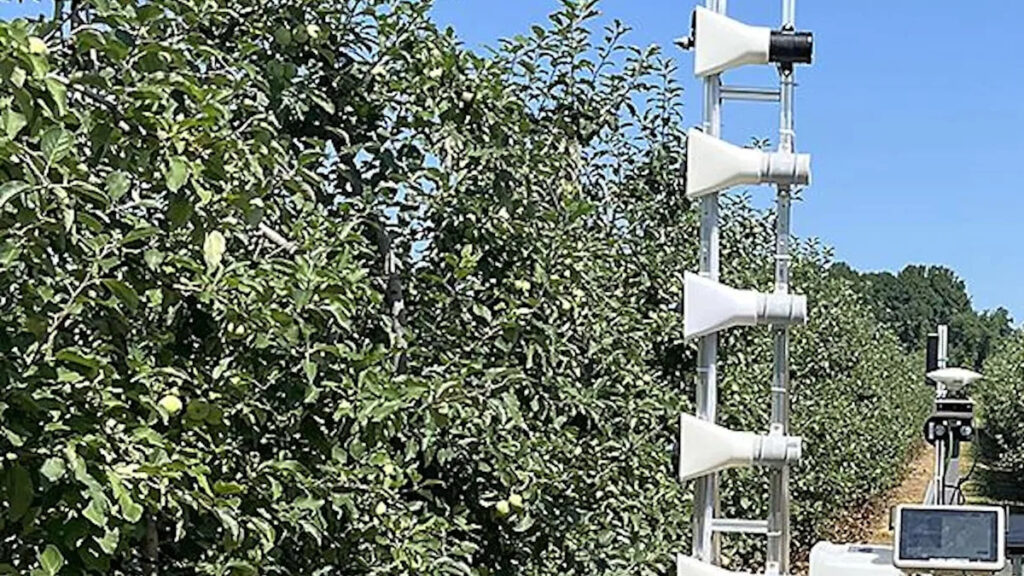
A handpicked team of experts is being trained at Penn State University to become envoys for artificial intelligence (AI), with the aim of revolutionizing agricultural practices, particularly in fruit orchards. This initiative directly addresses the pressing challenges faced by farmers in the face of rapidly changing climatic conditions.
The program will equip researchers with the tools to utilize AI in enhancing crop yields and managing orchard health. As detailed in a recent news release, these doctoral fellows will not only learn from a diverse team of experts but also gain opportunities for professional growth through research, mentorship, career planning, and public speaking. According to Long He, an associate professor and project leader, “By the end, these doctoral fellows will become leaders in using AI to improve farming and adapt to climate change.”
While this project is undoubtedly promising, it brings with it a set of complexities. The accelerated adoption of AI in agriculture can yield significant benefits, such as identifying solutions for diseases, pests, and other agricultural ailments exacerbated by climate change. Notably, NASA has linked rising global temperatures to air pollution primarily generated by the combustion of fossil fuels.
However, the environmental implications of AI are equally concerning. AI data centers consume vast amounts of electricity, which paradoxically increases the demand for fossil-fueled power grids. Moreover, these computing hubs require substantial water for cooling—up to 5 million gallons daily, enough to supply a town of approximately 50,000 people, according to the Environmental and Energy Study Institute.
“Just because this is called 'cloud computing' doesn’t mean the hardware lives in the cloud. Data centers are present in our physical world, and because of their water usage, they have direct and indirect implications for biodiversity,” remarked Noman Bashir, a fellow and postdoctoral student at the Massachusetts Institute of Technology.
This three-year program at Penn State is made possible by over $738,000 in funding from government sources and the university, showcasing a collaborative effort that spans multiple disciplines. He emphasized, “These students will learn how to apply AI and precision tools to solve real problems in tree fruit farming.”
Beyond immediate agricultural applications, fast computing is also paving the way for advancements across various fields, including genetics. For example, researchers at the University of Maryland are actively experimenting with apple genes to develop varieties that can better withstand extreme heat waves. Other scientists are exploring genetic solutions to help crops endure unpredictable weather.
Despite the energy demands of AI, there’s potential for offsetting this consumption through renewable energy sources such as solar power. Companies like Meta are already investing in cleaner electricity to power their data centers. Furthermore, homeowners can harness solar energy to charge electronic devices, enhancing personal sustainability.
Upgrading to energy-efficient appliances, including heat pumps designed to save energy, can be paired with solar installations to significantly reduce or even nullify electricity bills. Programs like The Cool Down's Solar Explorer help homeowners connect with trusted partners to obtain curated quotes and vetted installers, potentially saving up to $10,000.
One of the critical objectives of the AI training project at Penn State is to foster collaboration among academia, industry, and farmers. He articulated the program’s aspirations, stating, “Our hope is that the doctoral students trained in our program emerge as scientists ready to lead innovation in climate-smart agriculture.”
As the agricultural sector grapples with challenges posed by a warming planet, initiatives like this not only promise to enhance food production but also emphasize the importance of sustainable practices. The intersection of AI and agriculture holds the potential to transform the industry, but it requires careful consideration of both its benefits and environmental costs.
You Won't Believe Which 6 Game-Changing Players Could Transform the Lions' Future in CFP!

Why Ukraine's Elections are on Hold: The Shocking Truth Behind 10 Million Votes!

Is 1.12% of XRP Supply Vanishing? Shocking Consequences That Could Cost You!

Is Bitcoin About to Surge? What Whales Know That Could Change Everything by 2026!

Will the Stock Market Be Closed on January 1, 2026? Shocking Consequences You MUST Know!

Shocking 2026 ACA Premium Hikes: Are You One of the 15 Million About to Lose Coverage?
You might also like: