
Trump's Latest Move: Why Two Major Kennedy Center Events Were Canceled—Shocking Details Inside!

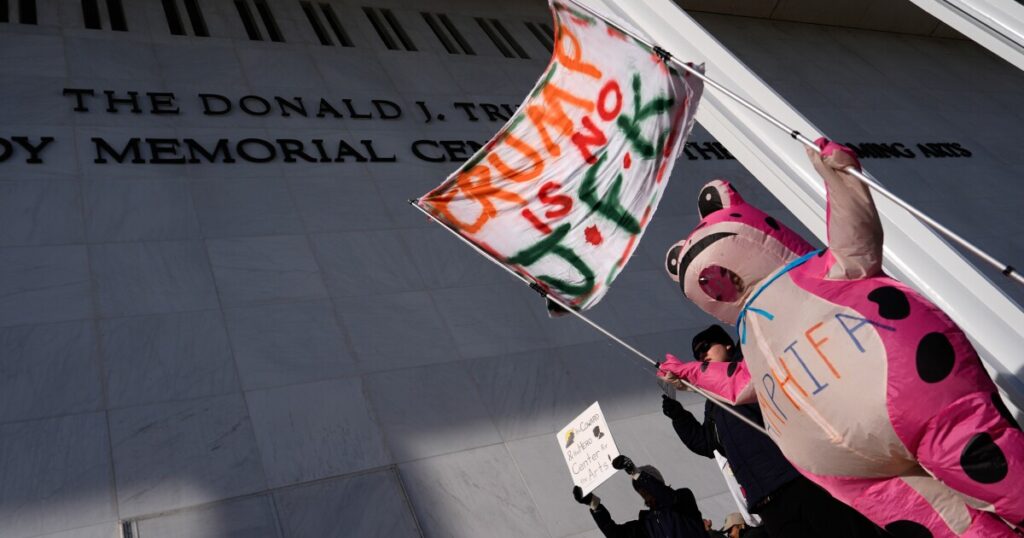
For the second time in a week, a significant event at the Kennedy Center has been canceled. The renowned jazz ensemble, The Cookers, announced that their scheduled New Year’s Eve concerts will not take place. This follows the center’s recent renaming to the Trump-Kennedy Center, a change made by President Donald Trump’s newly appointed board of trustees, raising questions about the future identity of this iconic venue.
The Kennedy Center, which opened its doors in 1971 as a living memorial to President John F. Kennedy, has historically been a bastion of American culture and arts. The name change, however, has sparked considerable backlash. While the center has updated its logos on its website and building, the original name was established by Congress, leading some to argue that it would require an act of Congress to officially alter it.
Although The Cookers did not explicitly cite the renaming as the reason for their cancellation, the timing raises eyebrows. In a statement on their website, the band reflected on the deep-rooted connection between jazz and themes of struggle and freedom: “Jazz was born from struggle and from a relentless insistence on freedom: freedom of thought, of expression, and of the full human voice. Some of us have been making this music for many decades, and that history still shapes us. We are not turning away from our audience, and we do want to make sure that when we do return to the bandstand, the room is able to celebrate the full presence of the music and everyone in it. Our hope is that this moment will leave space for reflection, not resentment.”
This announcement follows closely on the heels of another cancellation; musician Chuck Redd called off his annual Christmas Eve jazz concert at the Kennedy Center just a week prior. In response, the center indicated it would seek $1 million in lost revenue from Redd due to this cancellation, a move that has further inflamed tensions surrounding the venue’s new management and direction.
The political implications of these developments cannot be overlooked. Earlier this year, President Trump dismissed the Kennedy Center’s Board of Trustees and appointed himself as chair, a move that many view as a controversial power grab over a cultural institution that has long been associated with artistic integrity and independence.
As the Kennedy Center grapples with its new identity under the Trump administration, the fallout from these cancellations raises significant questions about the future of arts funding and the ability of artists to engage with spaces that have become politically charged. The Cookers’ and Redd’s decisions to withdraw from performances suggest a broader discomfort within the artistic community regarding the center’s evolving landscape.
In the realm of jazz and beyond, artists often serve as the conscience of society, reflecting cultural tensions and pushing for dialogue around pressing issues. The current controversies at the Kennedy Center may very well be a flashpoint for further discussions on how art intersects with politics in an increasingly polarized environment.
As the New Year approaches, the cultural landscape remains in flux. The outcome of this situation will not only affect artists and audiences but may also reshape the future of how we define and support the arts in America. The Kennedy Center, with its storied legacy, faces a critical moment as artists like The Cookers and Chuck Redd take a stand, signaling that the fight for artistic freedom and expression continues.
Snack Bar Market Set to Explode to $41B by 2031—Are You Missing Out on This Healthy Goldmine?

Is This the Shocking Reason AI Leaders Say Coding is No Longer the Issue? Discover the Surprising Truth!
2026 NFL Mock Draft: 5 Shocking Picks That Could Change the League Forever!
Snowstorm Hits New York: Is Your City Prepared for the 12-Inch Whiteout Disaster?
Trump's Shocking Call with Putin: What the White House Just Revealed Will Leave You Speechless!
You Won't Believe What Experts Say About the Shocking Rise in Homelessness – Act Now Before It's Too Late!
You might also like: