
Is Social Media Making You Emotionally Cold? Shocking Research Reveals the Hidden Danger!

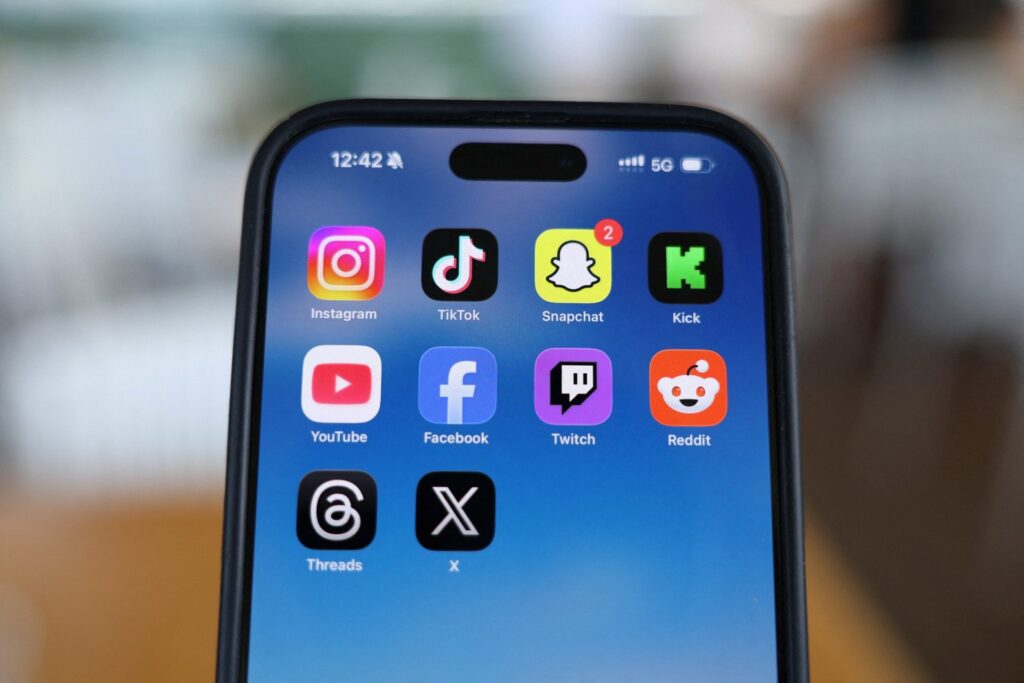
As political polarization continues to grip the nation, a recent study sheds light on how social media algorithms can play a role in mitigating partisan animosity. Conducted in the lead-up to the 2024 U.S. presidential election, researchers discovered that reducing the visibility of inflammatory content on platforms like X—formerly known as Twitter—can substantially improve users' feelings toward those with opposing political views.
The study was led by Tiziano Piccardi, an Assistant Professor of Computer Science at Johns Hopkins University, alongside a team of colleagues who developed an innovative tool to rerank social media feeds. Unlike traditional methods where only social media companies could modify algorithms, this open-source web tool allowed participants to experience a curated feed in real time, effectively lowering exposure to divisive posts.
Utilizing a large language model, the researchers identified and demoted posts that tended to polarize users, such as those inciting political violence or advocating for imprisoning members of opposing parties. Over a span of 10 days, participants who consented to the study experienced a feed that ranked these posts lower, requiring them to scroll further to encounter such divisive content. The results were promising: not only did participants report improved feelings toward members of the opposing party, but they also experienced a reduction in negative emotions while navigating their feeds.
Importantly, these positive effects were consistent across various political affiliations, indicating that this approach could serve as a unifying tool rather than a divisive one. “Reducing exposure to polarizing content measurably improved participants’ feelings toward people from the opposing party,” Piccardi noted, emphasizing the potential benefits for users irrespective of their political leanings.
Understanding the Algorithmic Impact
The research challenges a common misconception that users must choose between two extremes in social media feeds: engagement-based algorithms that promote sensational content or purely chronological feeds. In reality, there exists a spectrum of intermediate approaches tailored to optimize user experience, mood, and perceptions. The study highlights the urgent need for frameworks that allow independent researchers to test these new algorithms under real-world conditions, given the significant influence that feed algorithms exert on users' attitudes.
Other research in this field has echoed similar sentiments. A recent collaboration between academics and Meta found that simply switching to a chronological feed wasn’t enough to lessen polarization. Meanwhile, initiatives like the Prosocial Ranking Challenge at the University of California, Berkeley, are exploring alternative ranking systems aimed at fostering beneficial social outcomes across multiple platforms.
At the same time, advancements in large language models are paving the way for more nuanced understanding of human emotions and interactions. Some social media platforms, such as Bluesky and X, are beginning to give users more control over the principles that guide their feeds, reflecting a shift toward user-oriented design.
Looking ahead, Piccardi and his team aim to delve deeper into the long-term implications of these interventions. Future studies will explore how to balance various goals like cultural context and user control to cultivate healthier online environments. There remains much to investigate, particularly regarding how these changes can be sustained and what risks to online well-being—such as mental health and life satisfaction—still need addressing.
This research not only offers a path forward for social media platforms but also calls into question the ethical responsibilities they hold in shaping public discourse. As algorithms dictate what content individuals see, their potential to either bridge divides or exacerbate them is increasingly significant. As social media continues to play a pivotal role in shaping political landscapes, understanding and refining these algorithms may become crucial in fostering a more cohesive society.
Bitcoin's Shocking Reversal: Is a $10,000 Drop Coming After Nasdaq's Collapse? Don’t Miss This!

Rams vs. Falcons: You Won't Believe Who Just Ruined the Game—Shocking Last-Minute Twist!

3 Shocking Lawsuits Could Change Everything for Anywhere: Is Your Investment at Risk?

Local Business Owners Are Furious: Shocking Comment Sparks Mass Exodus from Shop Local Raleigh! You Won't Believe What Happened Next!

You Won't Believe These 8 Shocking Boundaries That Will Transform How Others See You!
You Won't Believe How GLP-1 Is Transforming the Snack Game—Your Waistline Will Thank You!
You might also like: