
30 Survivors Battle Shell in Shocking Typhoon Lawsuit: They Swam for Their Lives—Will Justice Prevail?

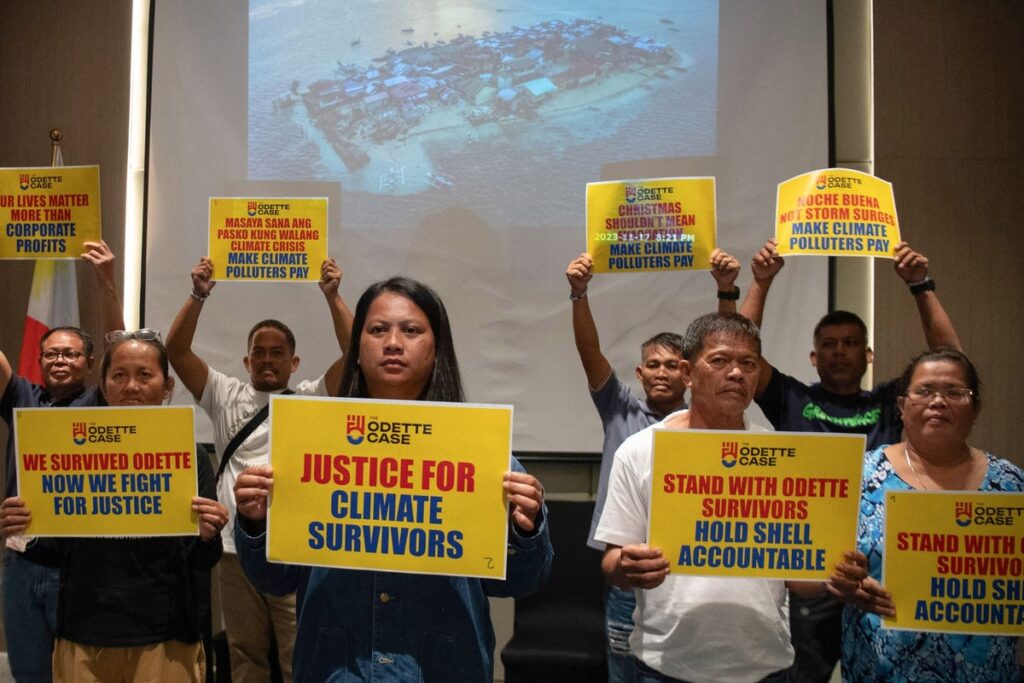
A poignant legal battle is unfolding in the United Kingdom, where a group of over 100 Filipinos, including a mother named Trixy Elle, is suing **Shell** for damages tied to the devastating effects of **Super Typhoon Rai**, known in the Philippines as **Odette**. This case, lodged at the **Royal Courts of Justice** in London, marks a significant moment in the ongoing struggle for accountability among fossil fuel companies in light of climate change, particularly as it pertains to communities in the **Global South**.
Super Typhoon Rai struck the Philippines in December 2021, resulting in approximately **400 fatalities** and wreaking havoc on coastal communities across the central **Visayas** region. Survivors like Elle have described harrowing experiences, including the moment their family had to "swim for our lives" as the storm's intense surge overwhelmed their home. Elle recalls the moment, stating, “We noticed the waves were high, going above the roof. The water came from the window, through the wood, through the door.” As conditions worsened, her family found themselves struggling against powerful waves and fierce winds.
The legal claim seeks compensation for the destruction of homes and loss of life, asserting that **Shell's** greenhouse gas emissions contributed to climate change in a way that exacerbated the storm's impact. The case aims to establish a direct link between **Shell's** activities and the personal suffering experienced by these Filipino families. Danilo Garrido, a lawyer with **Greenpeace**, highlights that **Shell** is responsible for more than **2%** of all historical global carbon emissions, underscoring the immense scale of the company’s responsibility.
“The case will assert that the defendant’s past and present carbon emissions and their intentional deception have contributed to anthropogenic climate change, which has made cyclones like Odette more intense and unpredictable,” Garrido explained. The claim also emphasizes that **Shell** has been aware of its role in climate change since at least **1965**, yet continued to invest in fossil fuels.
Central to the legal argument is **climate attribution science**, which analyzes how climate change impacts the frequency and severity of extreme weather events. A study from **Imperial College London** and the **University of Sheffield** found that extreme rainfall and wind speeds related to storms like Odette have become significantly more likely and severe due to human-induced climate change.
Though the case is being filed in the UK, it applies **Philippine law**, a reflection of the jurisdictional complexities often present in climate litigation. This approach follows legal principles under the **Rome II Regulation**, aiming to hold **Shell** accountable as a UK-domiciled parent company rather than its local subsidiaries.
This lawsuit builds on recent UK court decisions that have allowed communities from the Global South to pursue claims against British-based multinationals, potentially reshaping the landscape of corporate accountability in environmental matters. Supporters of the case, which is backed by various civil society organizations, argue that advancements in scientific understanding now enable a stronger connection between corporate emissions and tangible harm.
In response to the lawsuit, a spokesperson for **Shell** dismissed the claims as “baseless,” asserting that the company’s actions do not uniquely contribute to climate change, stating, “This is a baseless claim, and it will not help tackle climate change or reduce emissions.” They further noted that much of **Shell's** reported emissions arise from the use of its products by consumers rather than from its own operations.
For survivors like Trixy Elle, the case is about more than just monetary compensation; it is about seeking justice and accountability for the climate crisis that has disproportionately affected her community. “If we remain in silence, if we do not do something today, what will happen to our future, especially me? I have children,” she stated, encapsulating the urgency felt by many in the face of increasingly frequent and severe storms. “Before, superstorms were very rare in the Philippines,” she noted. “But now it seems normal. The frequency, the intensity, is not really normal.”
This legal action could set a precedent not only for climate accountability but also for the role of major corporations in exacerbating environmental crises. As the case moves forward, it underscores the pressing need for a reevaluation of corporate practices in the face of mounting climate challenges, and how those practices impact vulnerable communities around the world.
Don’t Miss the Epic Showdown: Can These 5 College Teams Shock the NFL This Week?!

California's Governor Race: Will a Shocking Runoff Change Everything for 39 Million Citizens?

Vogue Williams' Shocking Cosmetic Secret Exposed! You Won’t Believe What She Revealed After I’m A Celeb!

Why Missing the CREFC Miami Event Could Cost You Thousands: The Shocking Truth Behind This Gathering!

Ime Udoka Explodes Over Refs! You Won't Believe What Nikola Jokic and Sengun Achieved!
Texas Tycoons Are Snatching Up San Francisco Homes for Pennies—Will You Miss Out?
You might also like: